
- Expect Kansas City weddings to cost $2,000 to $3,500; metro average about $2,300, roughly $700 below the national $3,000 average.
- Most studios hide prices; always get the five hidden numbers in writing: overtime, travel, image count, delivery window, and retainer terms.
- Price tiers buy experience and protections; verify hours, second shooter, engagement session, contract, insurance, backup gear, and delivery expectations.
Here is the conversation I keep having. A couple sits across from me at coffee, clearly stressed, and asks some version of the same question: is this price normal? They have five quotes, three of them arrived only after an email exchange, and none of them describe the same thing. So I did what I wish someone had done for me when I started Griffin Creative Co in 2018. I sat down and researched the whole Kansas City market, wrote down every number I found, and turned the mess into one honest guide.
Fair warning up front: I run a documentary wedding photography studio here, so I have skin in this game. My promise in exchange is simple. Every number below is real, sourced, and current as of July 2026, including the ones where competitors beat me.
How I Did This Research
I reviewed 11 Kansas City metro wedding photography studios in July 2026: their websites, their published packages, and their listings on the major wedding directories. I recorded starting prices, package inclusions, retainer terms, overtime rates, and delivery promises wherever studios made them public. I compared those findings against The Knot Real Weddings Study, the largest ongoing survey of what couples pay nationwide, plus 2026 pricing surveys from across the industry. No studio is named. Every number is real.
The Short Answer
Most Kansas City couples spend $2,000 to $3,500 on wedding photography. The metro average sits near $2,300, about $700 under the national average of $3,000.
The full published range in our metro runs from $350 on the low end to $5,600 and beyond at the top. Couples here who hire established professionals report spending between $2,764 and $3,378. Where you land inside those numbers depends on hours of coverage, the photographer’s experience, and what comes bundled. The rest of this guide breaks down exactly how. If you have not landed on a number yet, my timeline builder will work out how many hours of coverage your day needs from the moments you want photographed.
The Kansas City Wedding Photography Market by Price
I plotted every published price I found against my own packages. Here is the market.
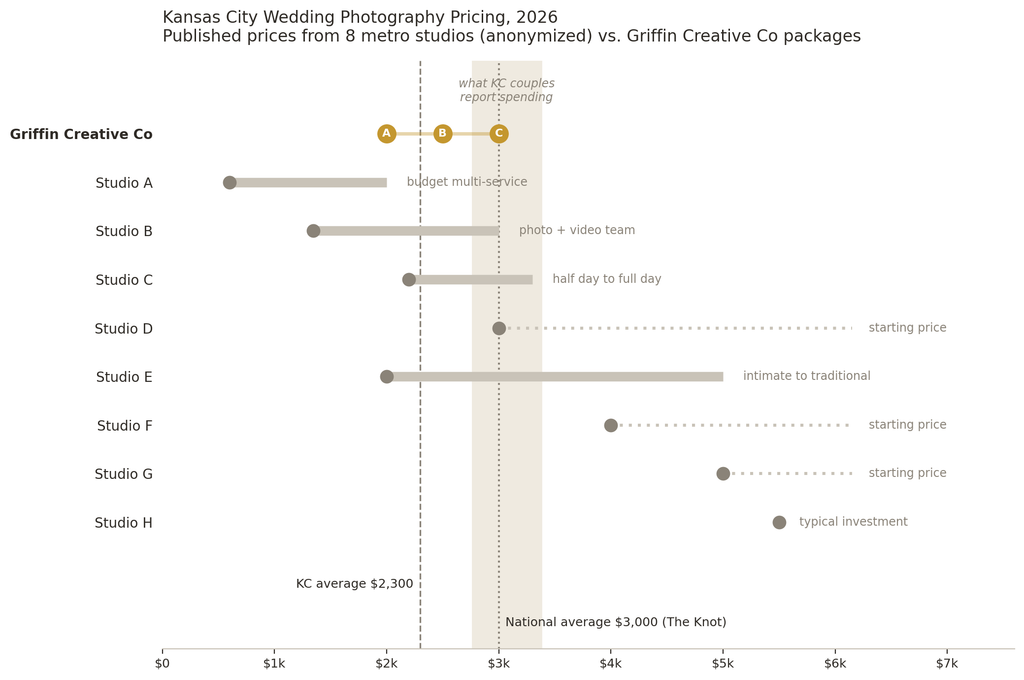
A tour of the chart, top to bottom. One multi-service company advertises wedding coverage from $600. A photo and video team runs promo packages from $1,345. One respected studio sells a half day at $2,200 and a full day with no hourly limit at $3,300. Another starts every wedding at $3,000 and climbs from there. One photographer prices intimate weddings from $2,000 and reports most traditional couples landing near $5,000. Two established studios keep prices off their own websites entirely, and the directories reveal starting points of $4,000 and $5,000. The priciest typical investment I found in the metro runs about $5,500.
Three tiers emerge from those dots, and each one trades something different. Under $1,500 buys newer photographers, side hustles, and volume operations. Real weddings get photographed well here sometimes. The trade is certainty: less experience reading a timeline, thinner contracts, and no track record when a memory card fails at hour six.
The $2,000 to $3,500 band holds most of the established professional market and most of the actual spending. Contracts, insurance, backup gear, consistent editing, and hundreds of weddings of judgment live in this tier.
At $4,000 and up you buy reputation, waitlists, associate teams, and a decade or more of name recognition. One studio in this tier has photographed over 350 weddings across 13 years. The photos are excellent. So is the invoice.
What Wedding Photography Packages Include, and What They Quietly Leave Out
Reading 11 studios’ fine print taught me more than the prices did. Almost everyone includes the basics: professional editing, an online gallery, and print rights. Past the basics, the bundles thin out fast.
Engagement sessions are a tier perk, not a standard. One transparent studio includes the session with two of four packages only. Another advertises collections where the session appears on request. Across the market, bundled engagement sessions live in mid and top tiers, and couples on entry packages pay separately.
Second photographers are almost never standard in Kansas City. One studio shoots 90 percent of weddings fully solo and reserves the second shooter for the top package alone.
Industry-wide, adding a second photographer costs couples anywhere from a few hundred dollars to $1,500 depending on hours. Ask how the number is calculated, because per-hour and flat-rate answers produce different bills.
Image counts vary less than prices do. A full Kansas City wedding day delivers between 400 and 800 edited photographs from most professional studios. Anyone promising thousands is counting duplicates. Anyone dodging the question deserves a follow-up email.
Retainers run from 30 to 50 percent of the package, and every serious studio makes them nonrefundable, because your date turns other couples away the moment you book. Payment plans are common across the market, so a big number rarely means a big single check.
The Transparency Problem
Here is the finding I did not expect to bother me this much.
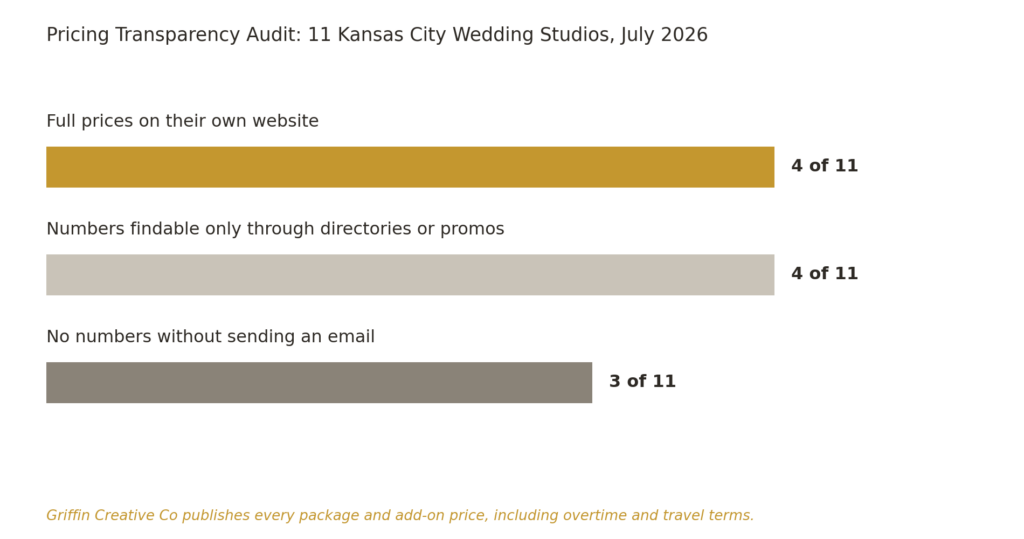
Of 11 Kansas City wedding studios reviewed in July 2026, only 4 publish full prices on their own websites.
Four more leak their starting prices only through wedding directories or limited-time promos. Three publish nothing at all until you email. The usual defense is “every wedding is custom,” and sure, days differ. But custom hours slot into published rates everywhere else in life, and hidden pricing serves the seller, not you. Studios gate prices to get you on a call before sticker shock arrives. You deserve the sticker first. Decide with numbers, then fall in love with a portfolio, in whichever order you like, but never without both.
The Five Numbers Hiding Under Every Wedding Photography Quote
A $2,500 quote and a $2,500 final bill are different promises. Across my research, five numbers separated them, and most contracts whisper where they should shout.
Overtime is the big one. Day-of overtime in Kansas City runs from $300 to $500 per hour depending on the studio. My rate is $300. One local studio charges $500. Neither number appears in an initial quote unless you ask, and receptions run long more often than they run short. Get the hourly overtime figure in writing.
Travel is the second. Most photographers include a radius and bill past the edge of the map. Mine covers 35 miles from downtown Kansas City, then bills at cost as one flat line item. Ask for the radius and the method, because “mileage plus time” math surprises people.
Rush delivery, album upsells, and the retainer terms round out the five. Standard galleries across the market arrive in 4 to 8 weeks. Faster costs extra everywhere, mine included at $500 for a 2 week gallery. Albums quoted after booking cost more than albums negotiated before. And the word nonrefundable next to your retainer means what you think, at 30 to 50 percent of the package, so read before you wire.
Kansas City Wedding Photography Prices vs the Rest of the Country
The Knot Real Weddings Study puts the national average for a professional wedding photographer at $3,000, which works out to roughly $375 per hour across an 8 hour day. Broader 2026 surveys cluster the typical national spend between $2,900 and $3,500, with couples commonly paying between $2,649 and $3,574. In the biggest coastal metros, starting prices for experienced professionals run $6,000 to $9,500.
Kansas City wedding photography costs about $700 less than the national average. Experienced professionals here charge what entry-level shooters charge on the coasts.
For your budget the takeaway is clean. In this market, the national average of $3,000 buys the top of the established professional band instead of the middle.
Where My Wedding Photography Pricing Lands in All of This
Since I wrote a whole post about other people’s numbers, here are mine, chart-confirmed. Package A runs $2,000 for 6 hours. Package B, the one most couples pick, runs $2,500 for 8 hours. Package C runs $3,000 for a full day with no hourly cap, getting ready through send-off. Every package includes the full edited gallery with print rights, timeline planning, and vendor recommendations. The second photographer runs $100 per hour worked, overtime runs $300 per hour, engagement sessions add $400 for booked clients, and every one of those numbers lives in public on my wedding photography page, add-ons and travel terms included.
The positioning is deliberate. A and B bracket the metro average. C sits at the national average and buys the whole day. And the transparency is the point: I priced my studio the way I researched this post, in the open, so any couple with this guide and my pricing page holds a complete comparison with zero emails sent.
How to Compare Wedding Photography Quotes
Five steps turn a pile of mismatched quotes into a decision.
Normalize every quote to hours and inclusions
An eight hour package with an engagement session and a $2,800 price beats a $2,500 six hour package for plenty of couples. Price per hour of coverage is the honest denominator.
Ask each studio for the five hidden numbers
Overtime rate, travel terms, image count range, delivery window, and retainer percentage with its refund terms. Get every answer in writing.
Ask to see three complete galleries
Full real weddings, start to finish, not highlight reels. Portfolios show the best 30 photos ever taken. Galleries show your actual future.
Confirm the boring protections
A written contract, proof of insurance, and backup equipment. Every established studio in my research clears this bar. The $600 tier sometimes does not.
Weigh the work you never see
An eight hour wedding carries hours of culling, editing, planning calls, and gallery work behind the scenes, which is why one wedding often equals a week of labor and why sustainable professionals price the whole week.
Frequently Asked Questions About Kansas City Wedding Photography Cost
The metro average sits near $2,300, with the full published range running $350 to $5,600. Couples hiring established professionals report spending $2,764 to $3,378, and most land between $2,000 and $3,500 depending on hours and inclusions.
The Knot Real Weddings Study puts the national average at $3,000, and 2026 industry surveys cluster between $2,900 and $3,500. Kansas City runs about $700 under the national number, making this one of the stronger value markets in the country.
Wedding planners commonly suggest 10 to 15 percent. Against the 2026 national average wedding cost of $34,200, expect $3,400 to $5,100. In Kansas City the same percentage stretches further, and $2,500 to $3,000 buys established full-day coverage.
Between 400 and 800 edited images for a full wedding day across most professional studios, with 35 to 55 finished photos per hour as the working standard. Get the range in writing along with the delivery window.
You hire a person for a day and receive a week. Shooting hours sit on top of planning calls, timeline work, culling, editing, gallery delivery, insurance, backup gear, and taxes. Sustainable pricing covers every hour, not the visible eight.
Sometimes. Talented newcomers build portfolios at low prices, and some deliver beautifully. Protect yourself at any price point: three full galleries, a written contract, proof of backup equipment, and a stated delivery window. Vague answers cost more than the discount saves.
Most Kansas City couples book 10 to 12 months out, and peak Saturdays in late spring, September, and October fill 12 to 18 months ahead. A signed contract and retainer hold your date. A friendly email thread holds nothing.
Check My Math
Everything in this guide came from public numbers, and mine are the most public of all. Put my pricing page next to any quote in your inbox, ask both of us the five hidden numbers, and see who answers faster. When the math checks out, tell me about your day on my contact page. I reply within 72 hours, straight answers included.