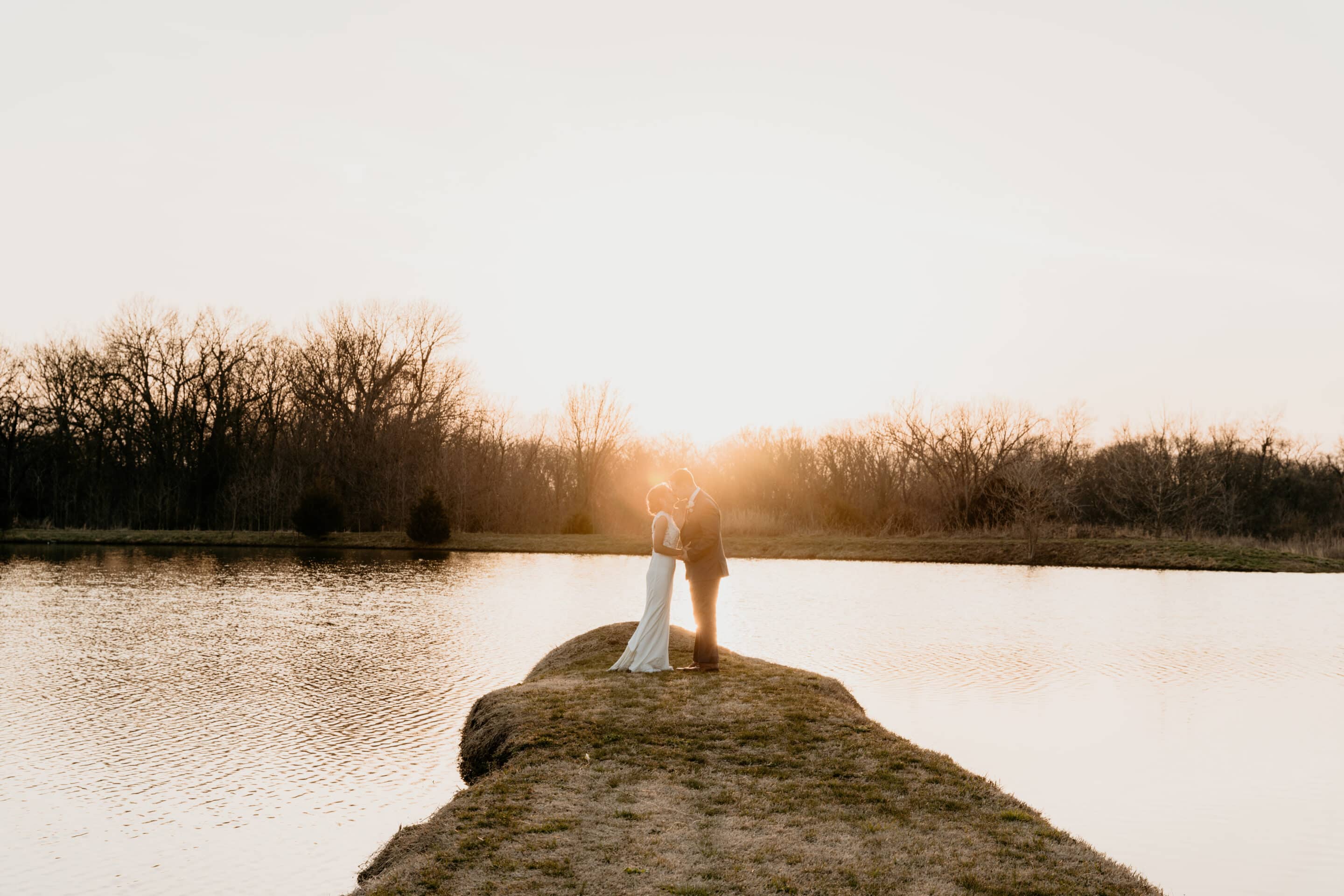

- Hire a local photographer to scout, send photos and dropped pins, and act as your eyes on the ground.
- Build the evening backward from sunset and guests' schedules; set a ready by window so no one is ready before the first minute.
- Share photos and pins for path, stop, and rally point; use live location and a simple confirmation text to avoid spoiling the surprise.
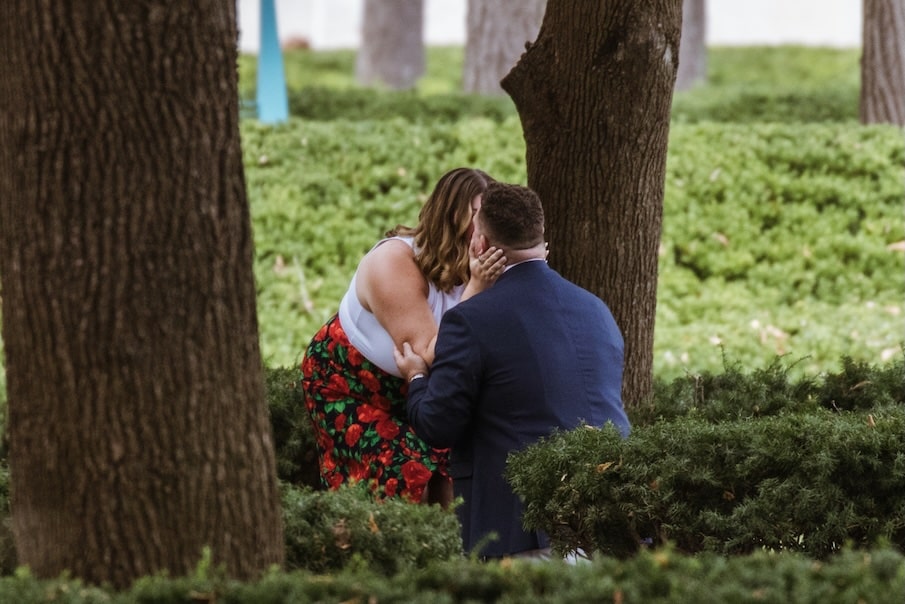
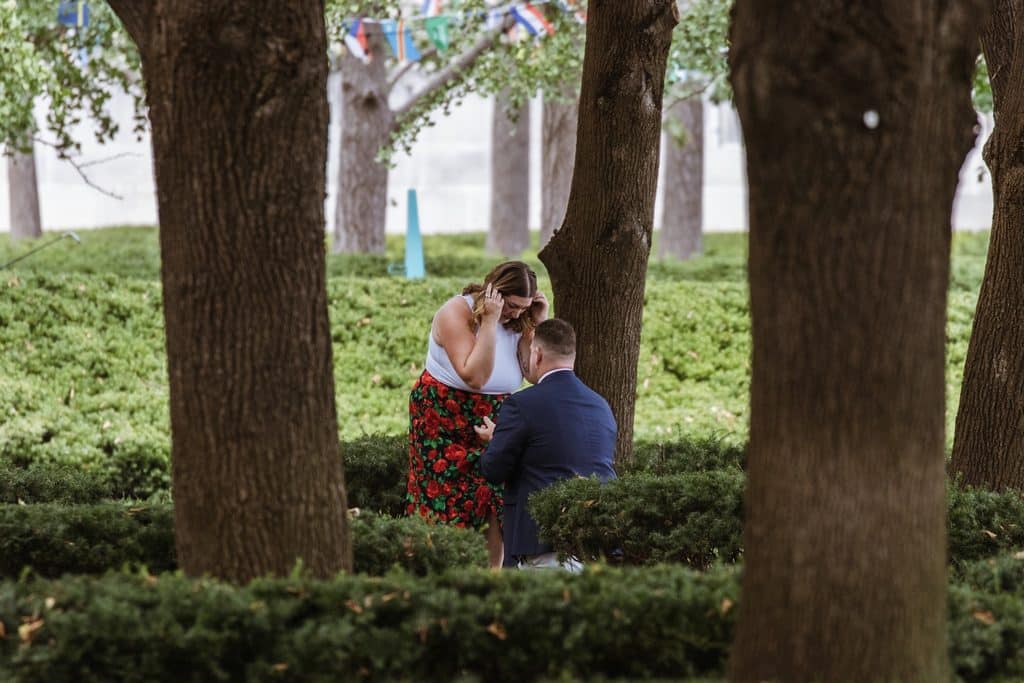
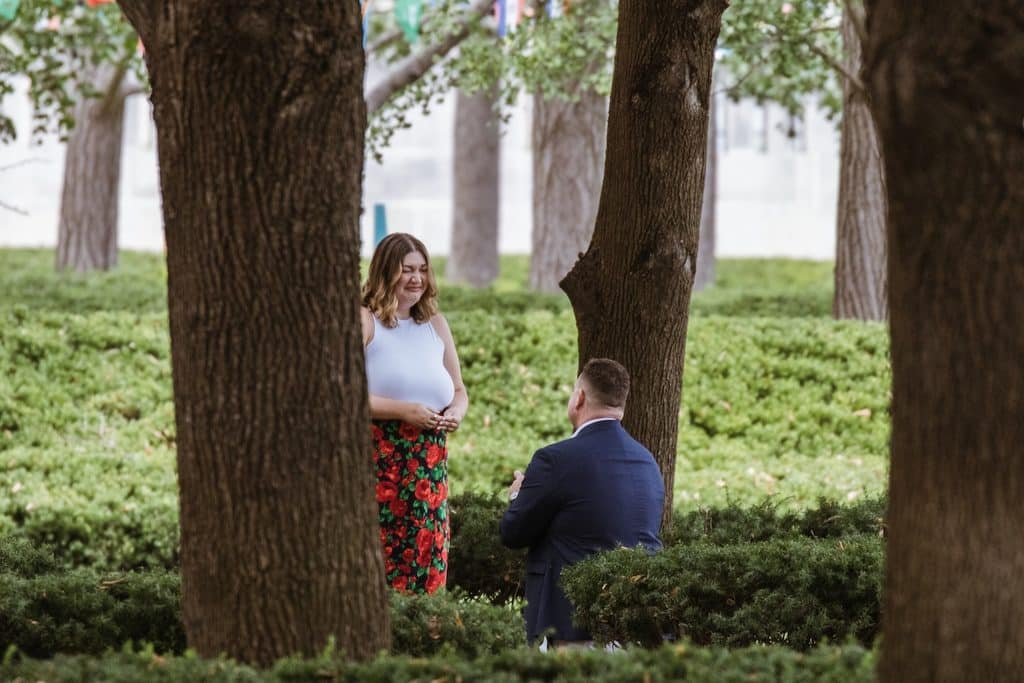
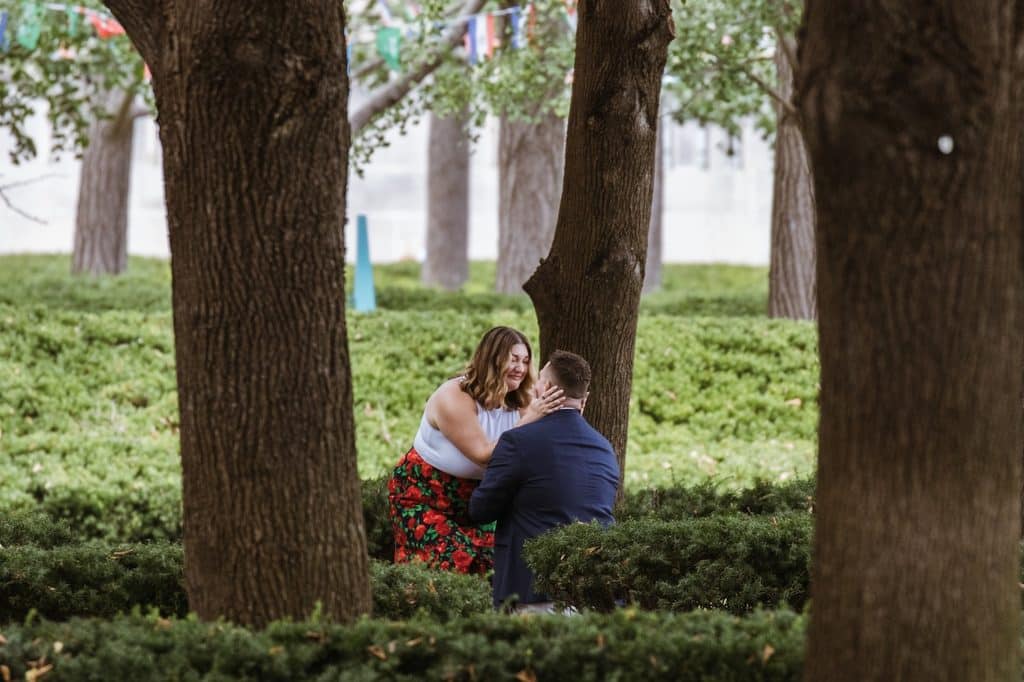
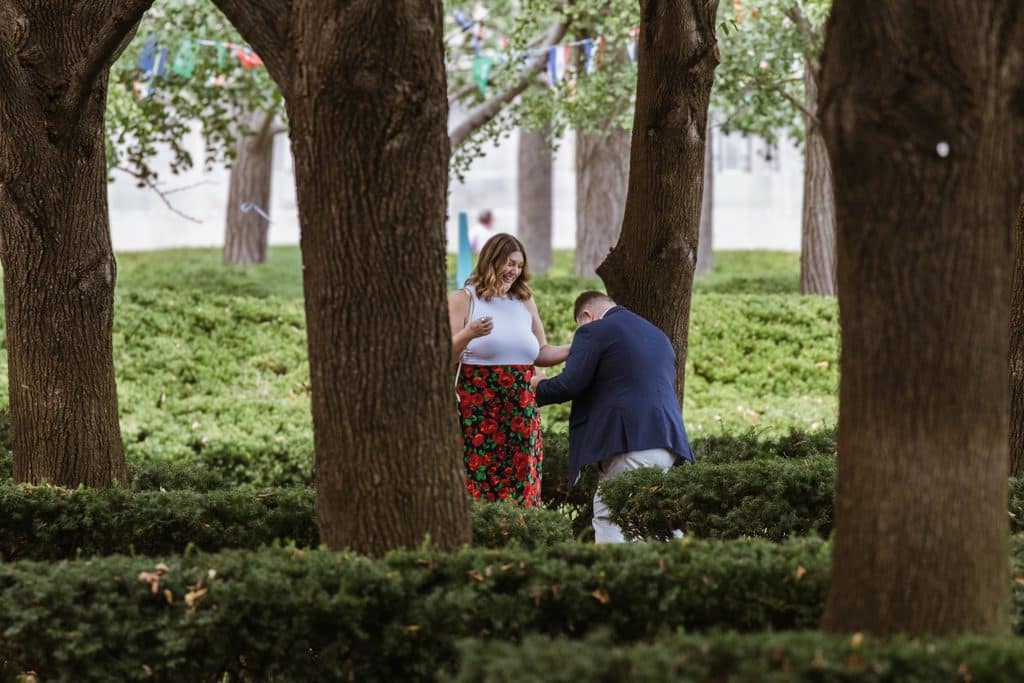
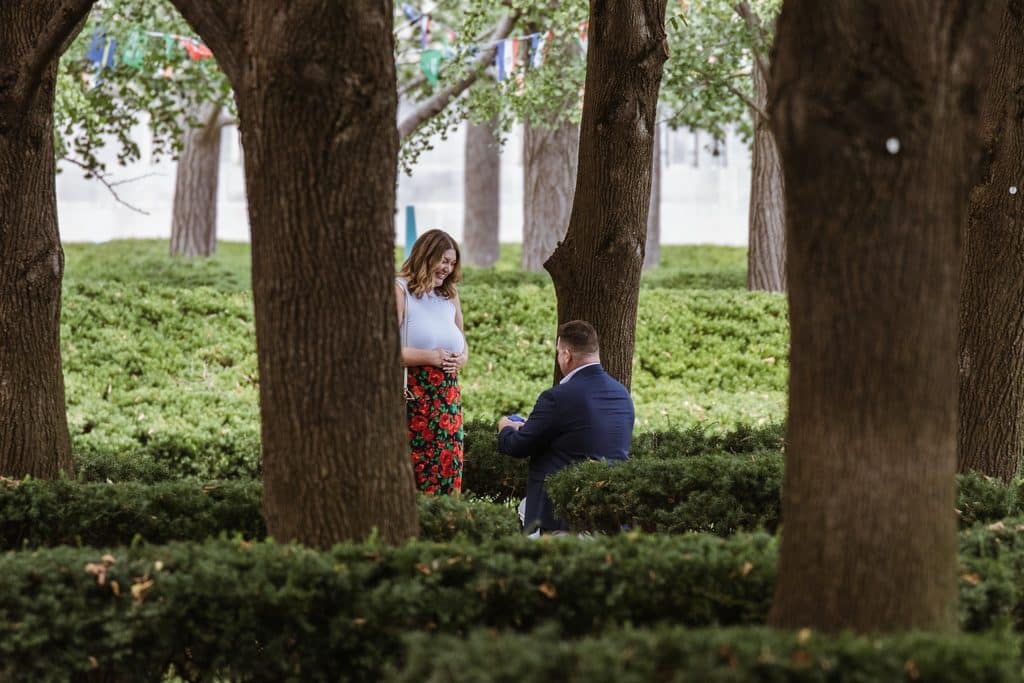
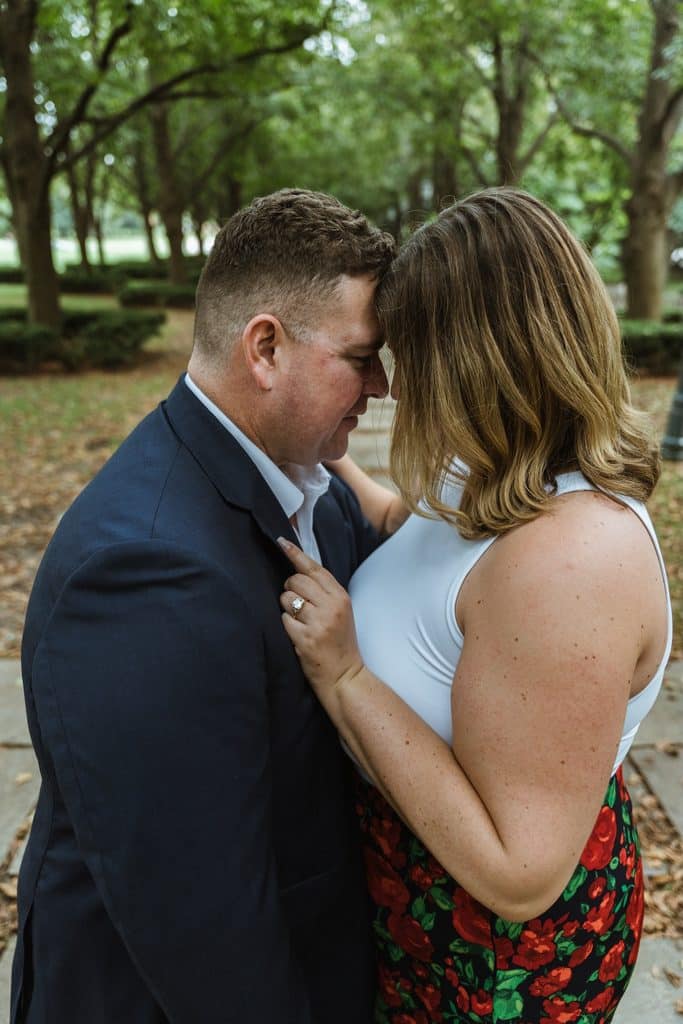
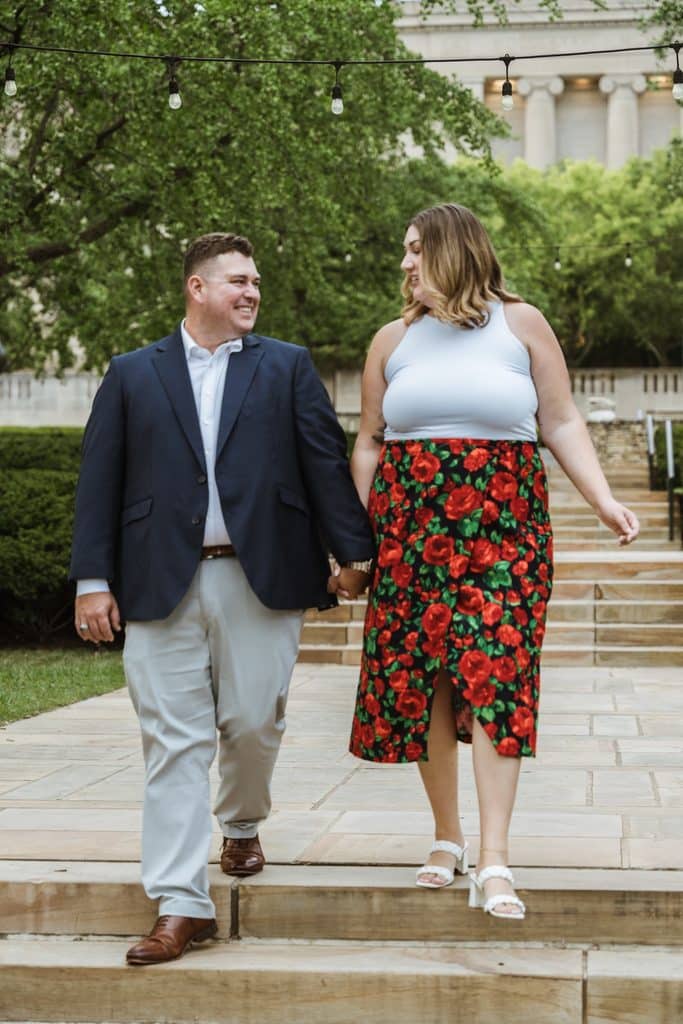
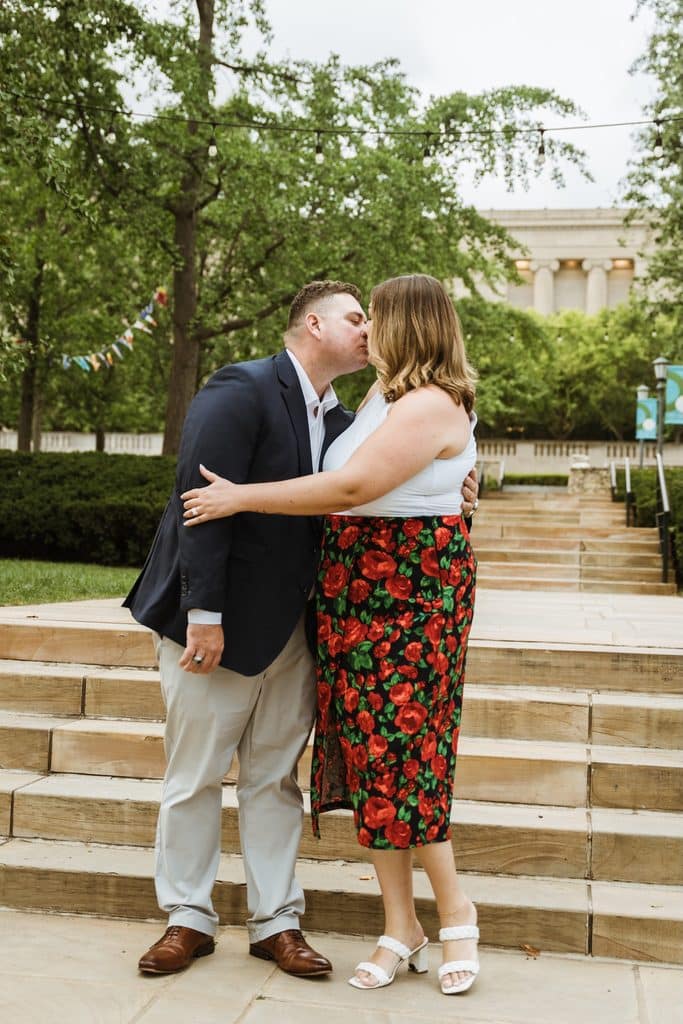
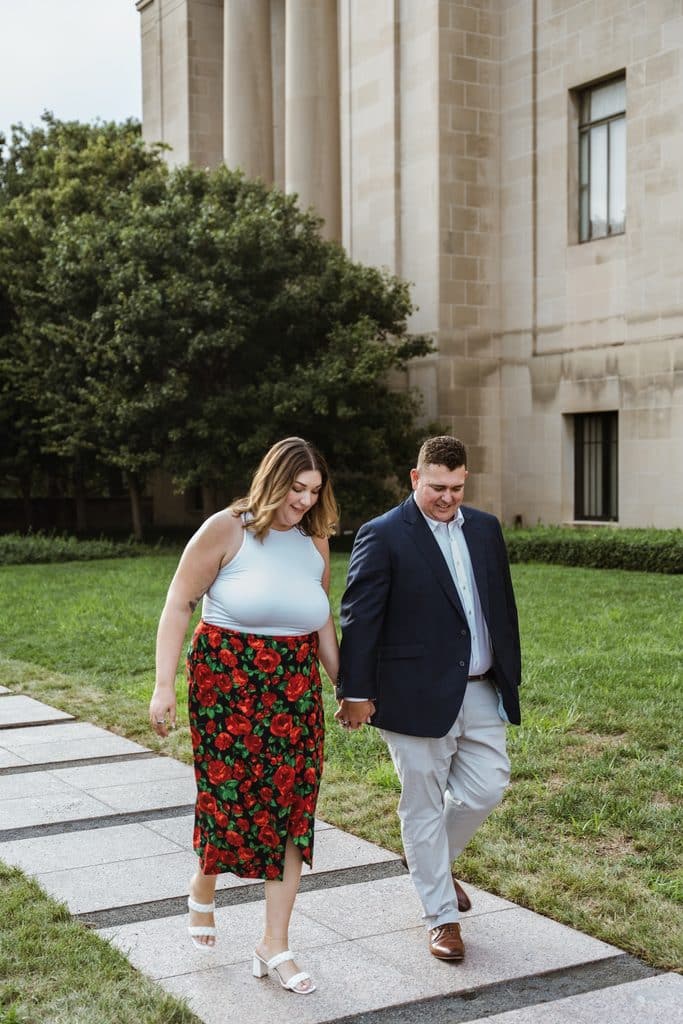
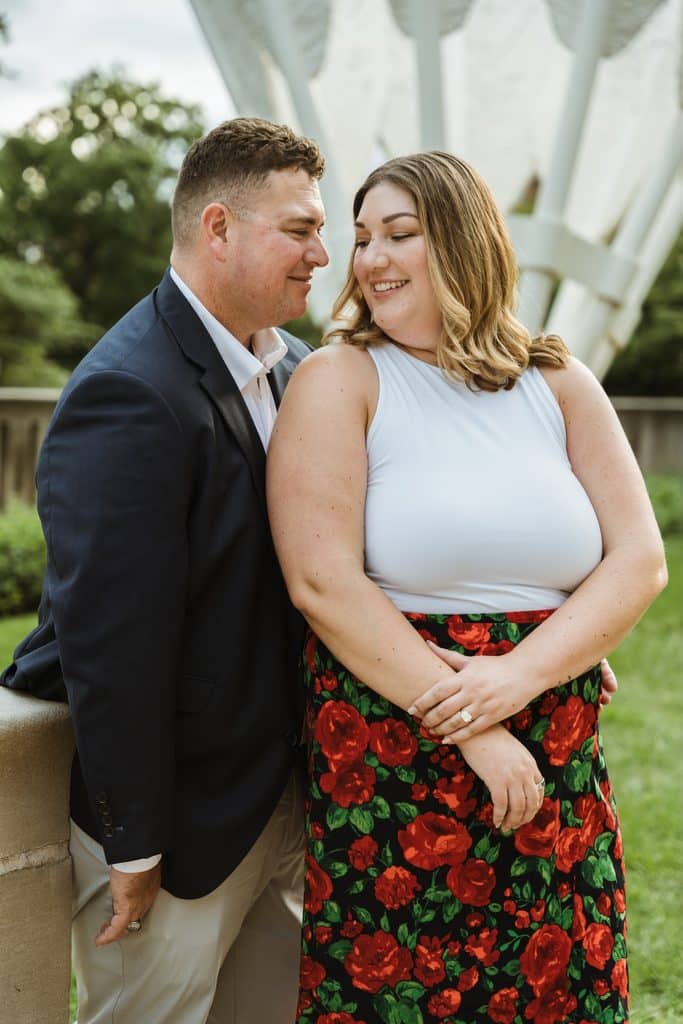
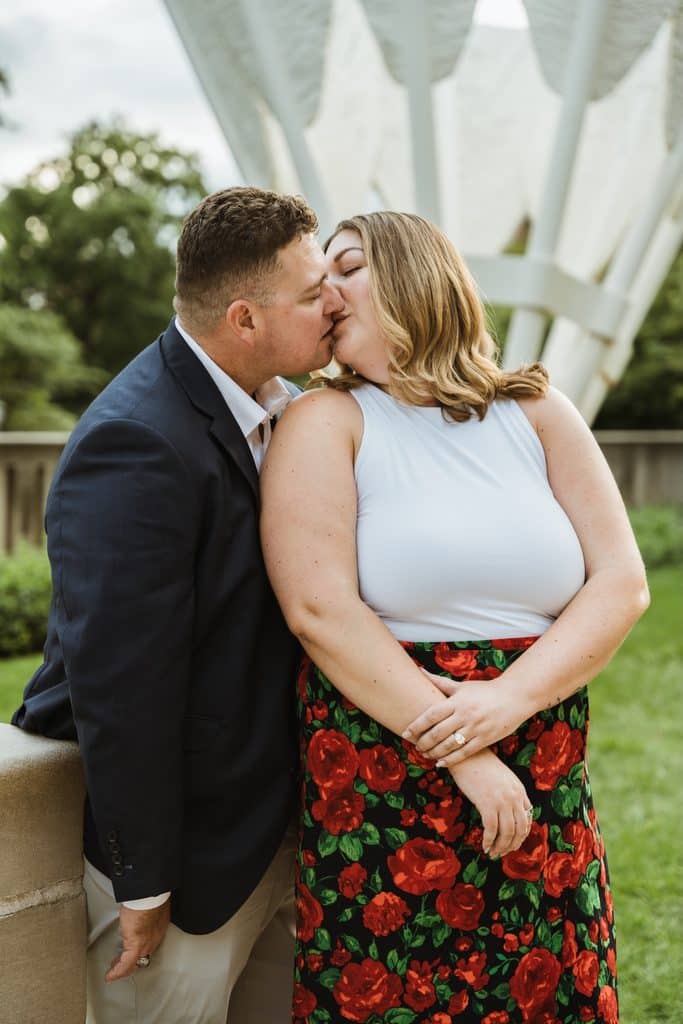
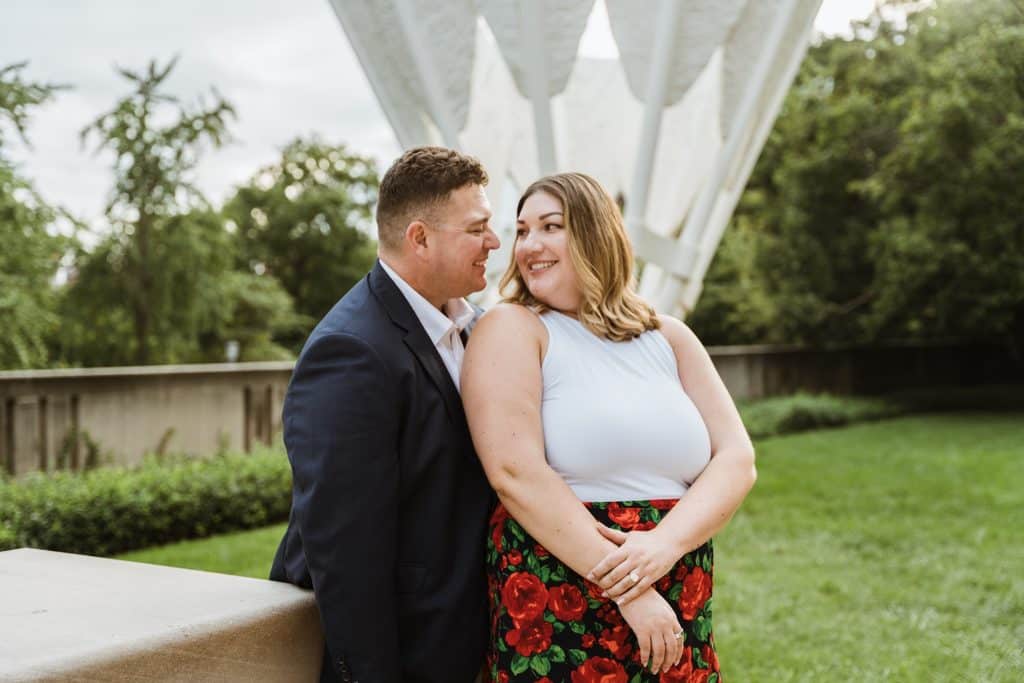
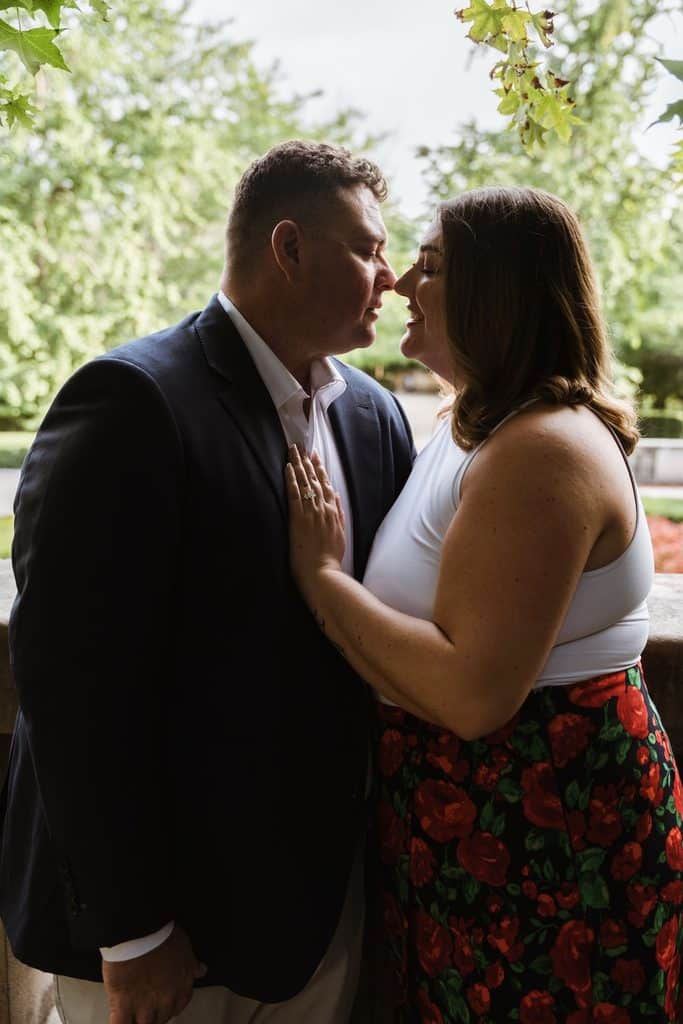
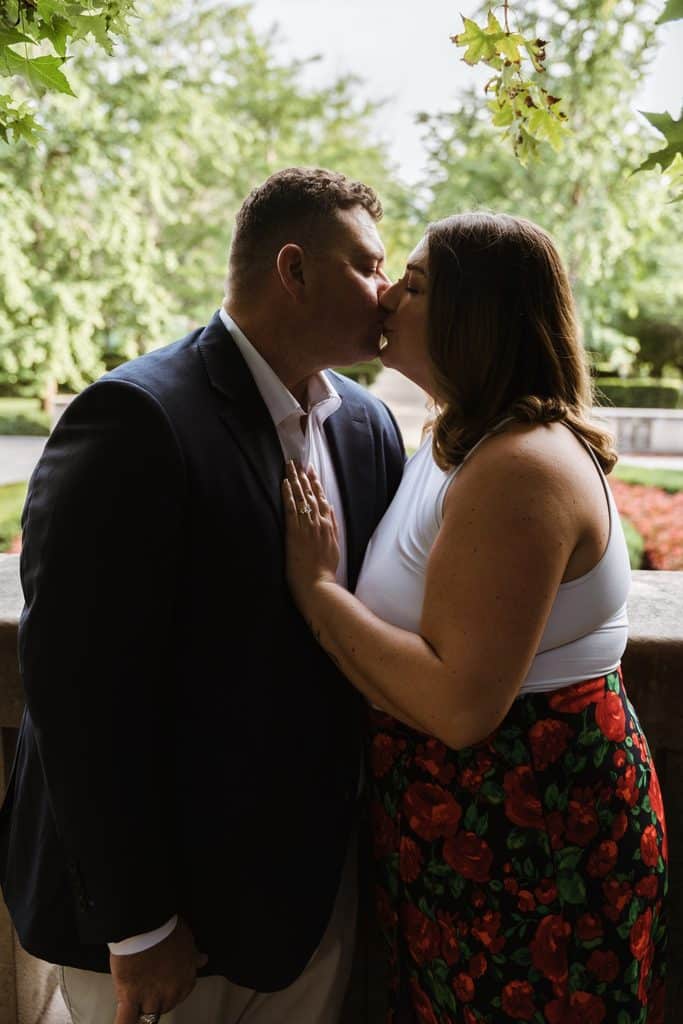
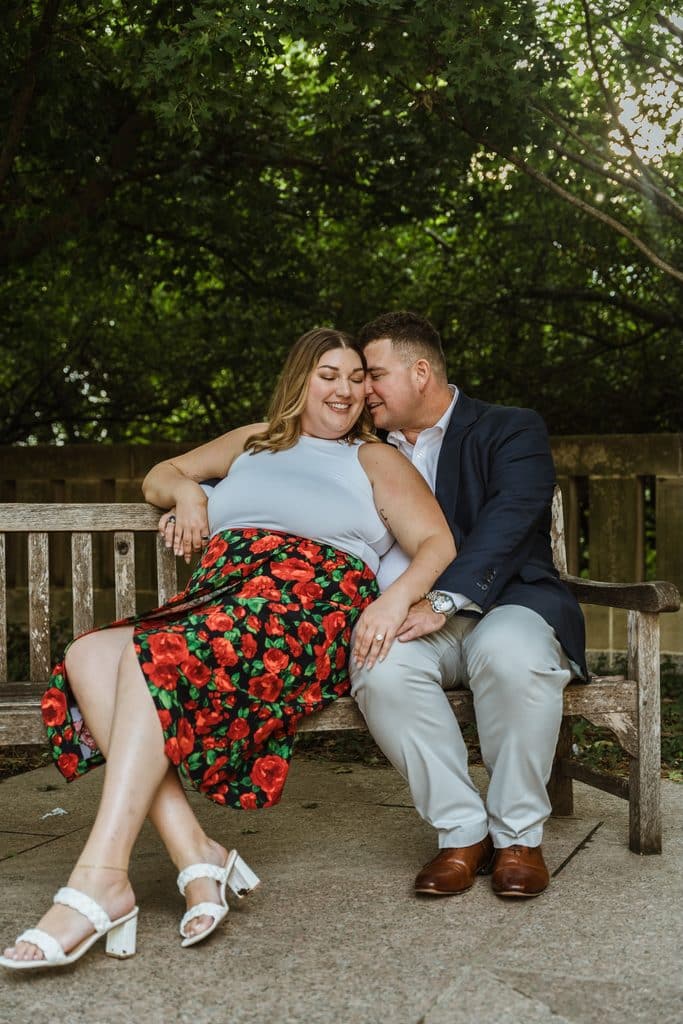
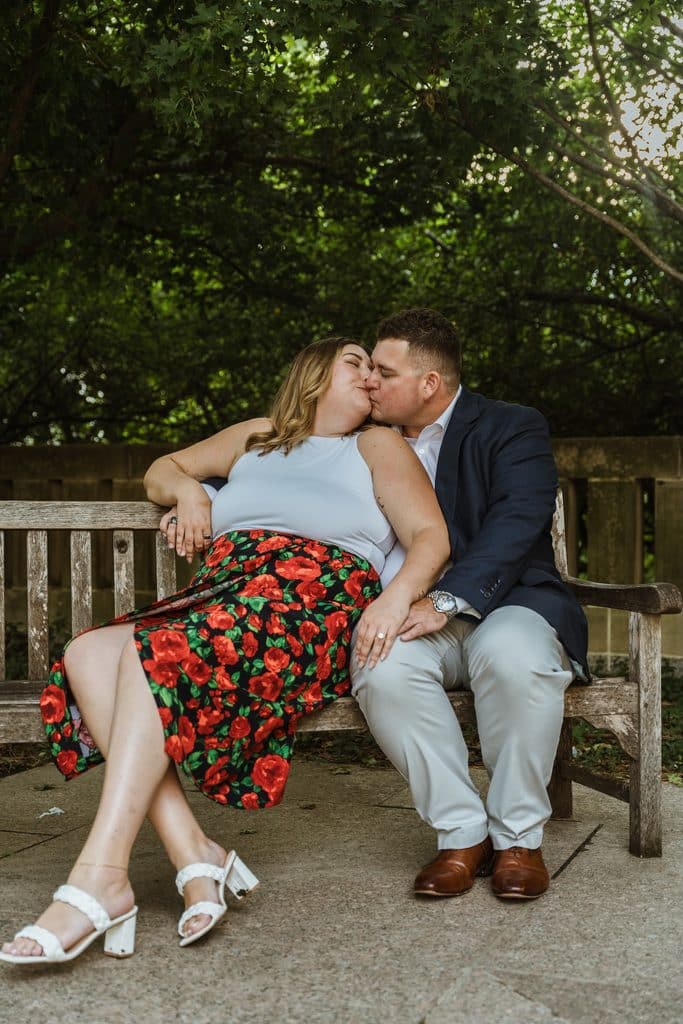
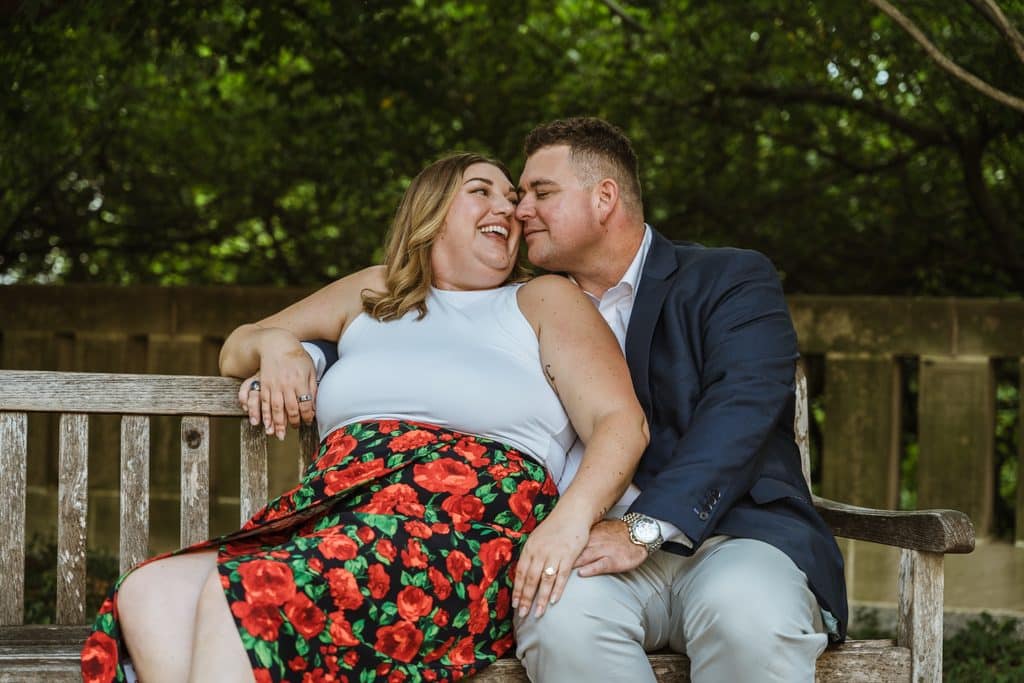
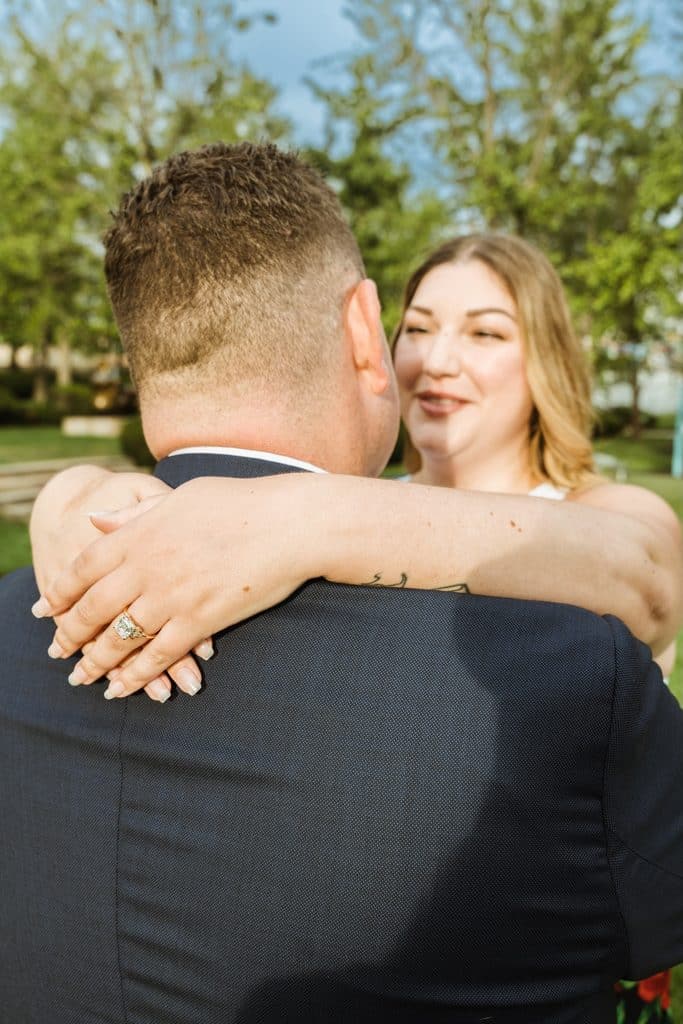
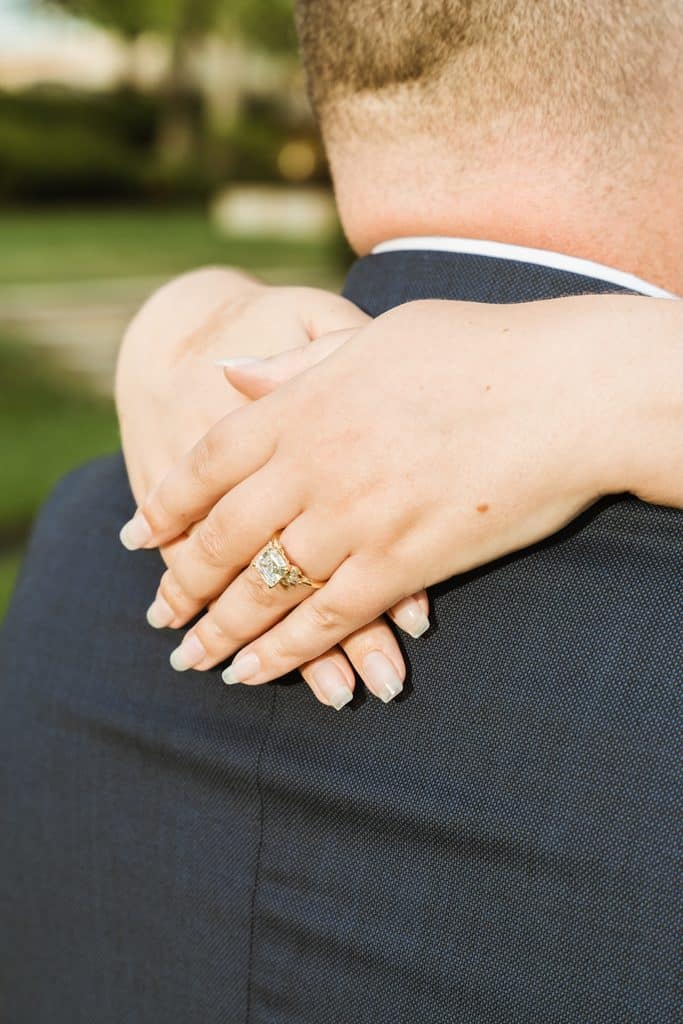
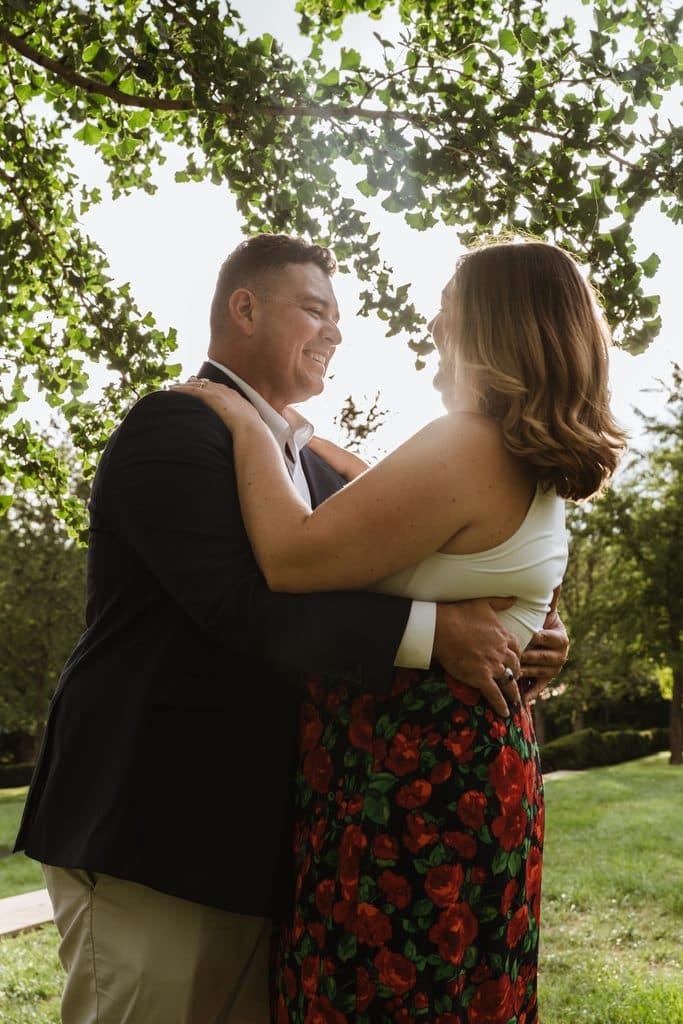
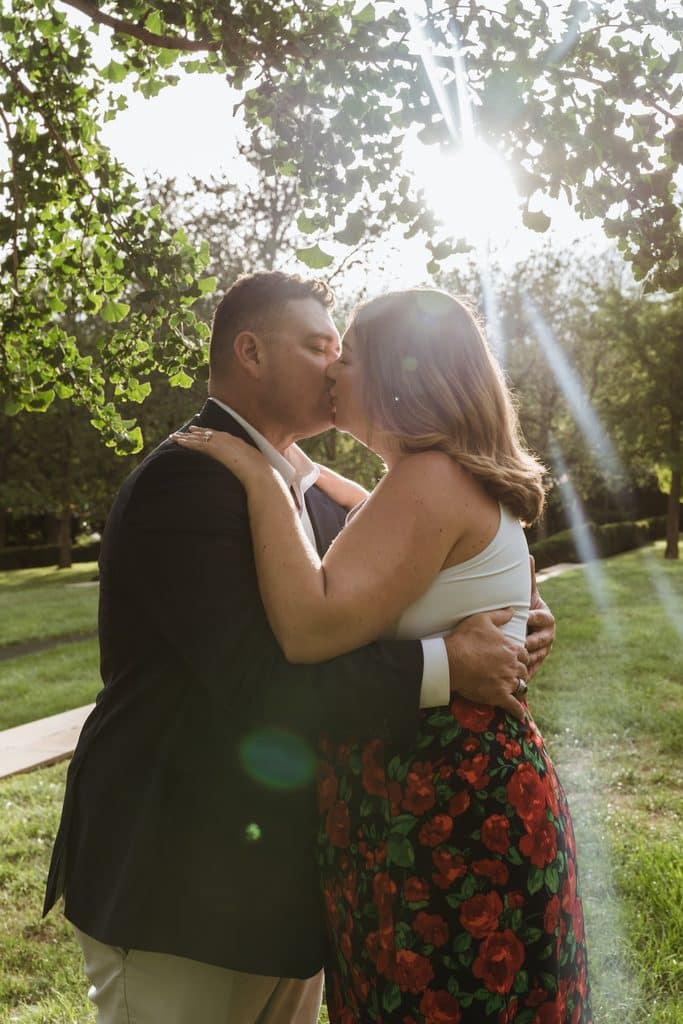
Will planned his proposal from Hawaii. Sondra lived in Kansas, her sister's family lived three hours away in Wichita, and Will had walked the Nelson-Atkins grounds exactly once. He never scouted the spot with me, and we never met in person to plan the proposal. Over seven weeks of emails, annotated maps, photos, and dropped pins, we built a plan to put a ring on Sondra's finger on a September Sunday, with her family and a group of friends watching from across the lawn.
His situation answers a question long-distance couples ask me: how to plan a proposal when you live a long way from where the proposal happens. The short version is to let your photographer be your eyes on the ground and plan everything else in writing.
To plan a proposal long distance, hand the scouting to someone local. I walked the Nelson-Atkins grounds, picked the spot, and sent Will photos from three angles plus a pin for himself and one for the family. We set the timing from the September 20 sunset (about 7:18 p.m.), the museum's 5 p.m. Sunday closing, and the three-hour drive Sondra's family faced back to Wichita. Will flew in from Hawaii a few days before the proposal and planned the whole evening without seeing the spot in advance.
Planning a Proposal From Another Time Zone
Will lives in Hawaii, five hours behind Kansas City. In early August he was also traveling for work, so our planning happened in short bursts of email between his meetings and travel. He wouldn't land in Kansas City until a few days before the proposal, and once he arrived, he'd be with Sondra and unable to talk freely. A site walk together was never on the table.
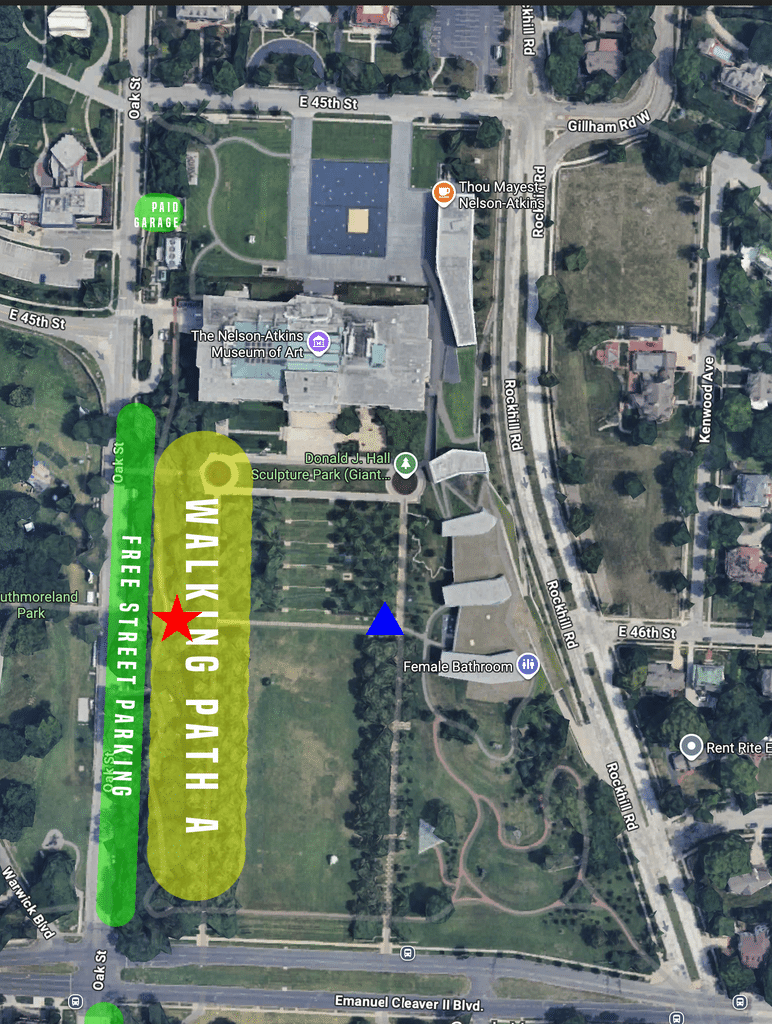
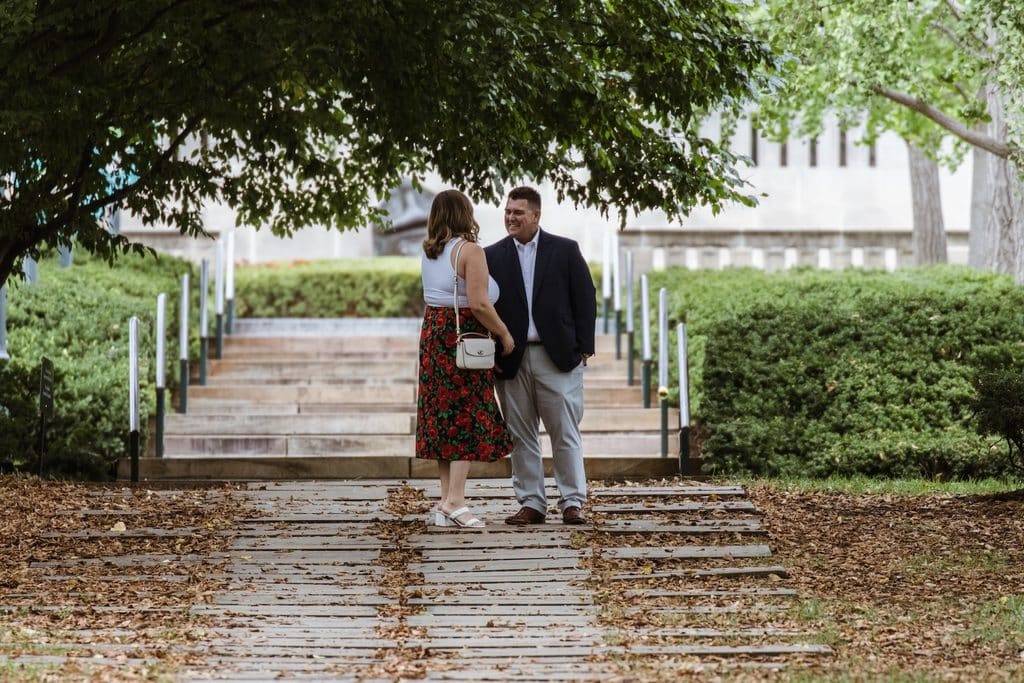
So every decision had to travel well in writing. I sent him maps of the grounds with the proposal spot, the family's hiding spot, and parking marked. After I scouted, I sent three photos of the spot: the path he'd walk out of the museum, where to stop, and my point of view from down the path. Pins followed by text so he and the family dropped them straight into their maps.
Will told me early on he didn't need a FaceTime from the grounds. Photos and a conversation afterward would do. Most long-distance couples assume they need to see a location before committing. Will's plan worked because the photos answered the one question a visit answers: where exactly do I stand?
Planning Around a School Night and a 7:18 Sunset
Timing was Will's first big question, and the hardest one. Sondra's sister was bringing her family up from Wichita, the kids had school the next morning, and the drive home runs about three hours. Will had already looked up the sunset and knew from Hawaii how the best color shows up 25 to 30 minutes after the official time.
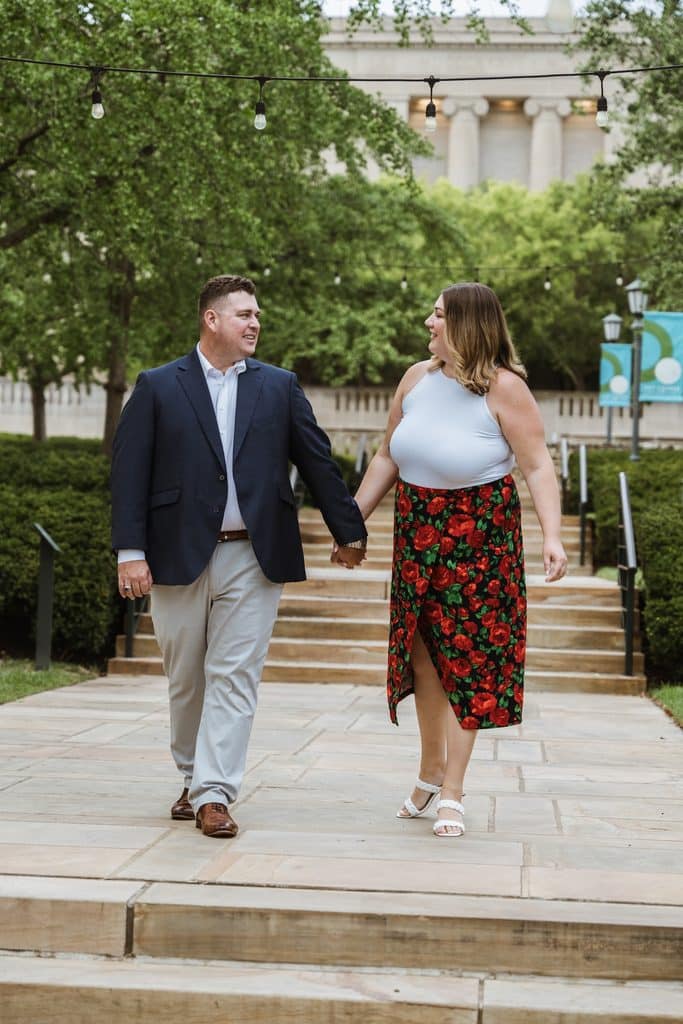
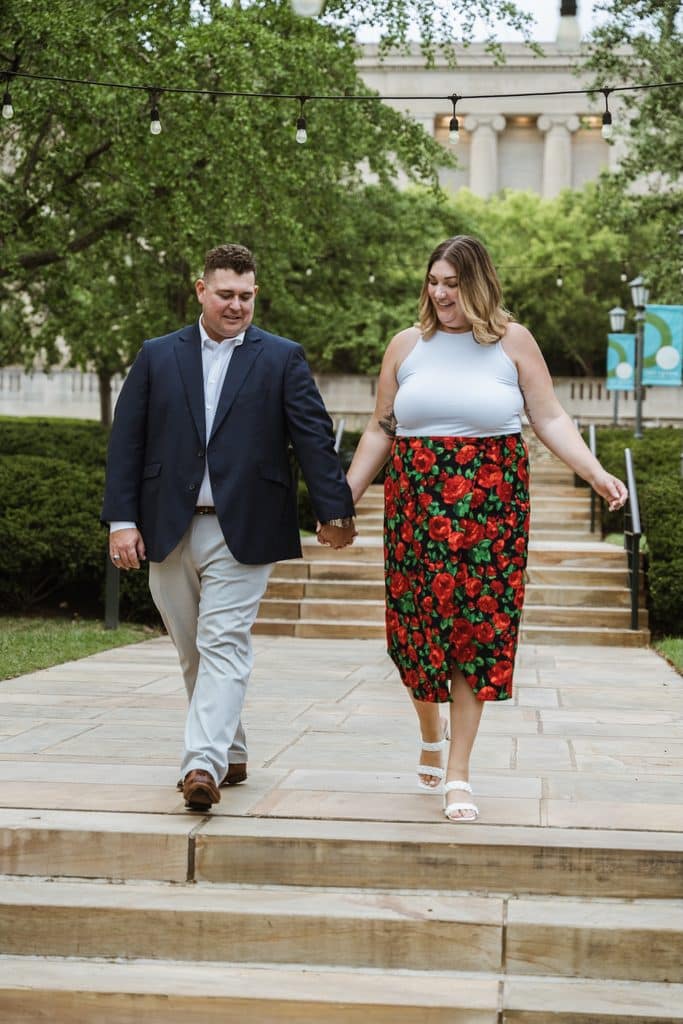
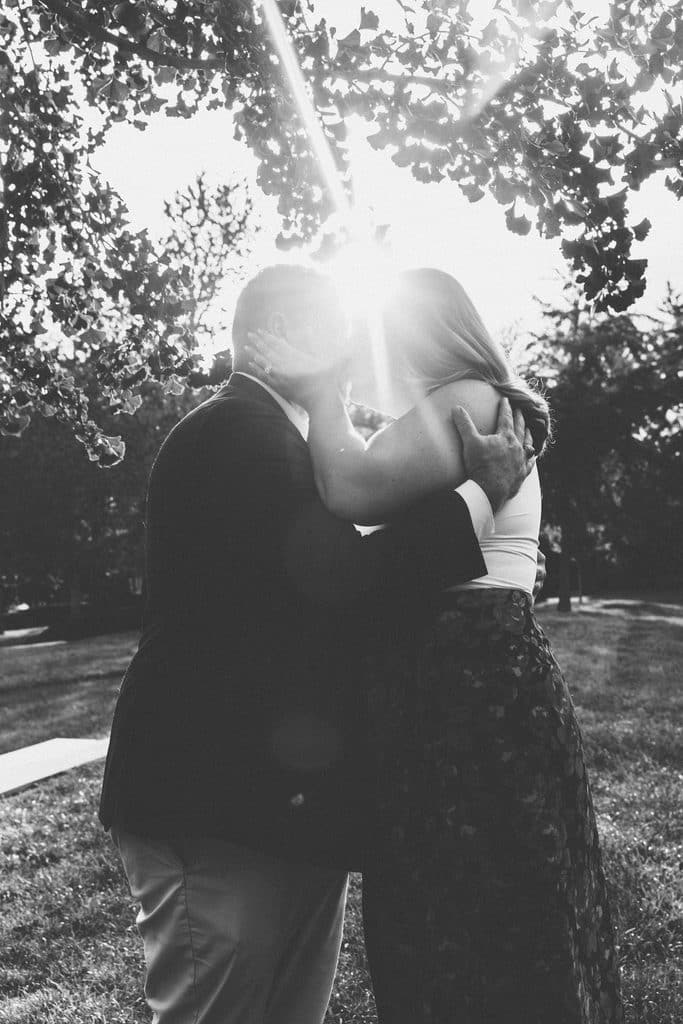
The museum closes at 5:00 on Sundays, and he wanted to walk out of the galleries with Sondra right then, propose, bring out the family, and send them toward Wichita by about 5:30. He also didn't want to miss golden hour near 7:20. So he added a second hour, and we booked 5:00 to 7:00 p.m. The proposal and the family reunion took the front of the block. The portraits took the back, when the sun dropped low over the lawn.
Most couples assume the proposal has to happen at golden hour. Will split his evening into two jobs instead. The proposal happened while Sondra's family stood watching, the portraits happened when the light was best, and the second hour connected the two without asking anyone to give something up.
Choosing the Spot on the Nelson-Atkins Grounds
I sent Will a few options on the grounds, each with a different feel:
- The central lawn: the classic view, with the museum filling the background, or trees and grass for something more outdoorsy.
- The Sculpture Park: 22 acres with paths winding downhill past sculptures, greenery, and trees.
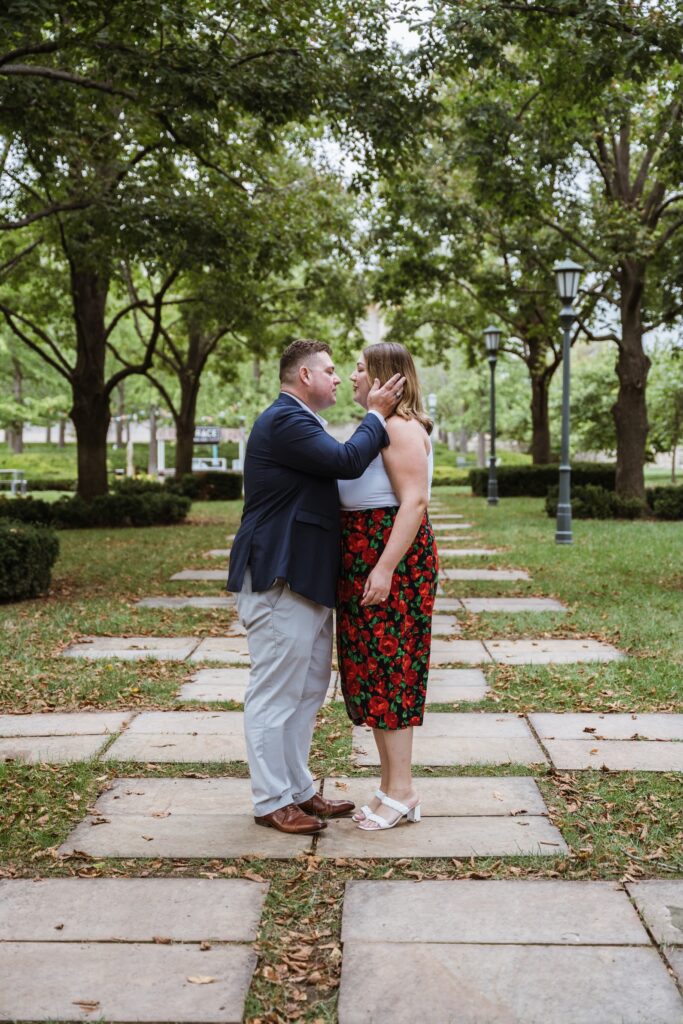
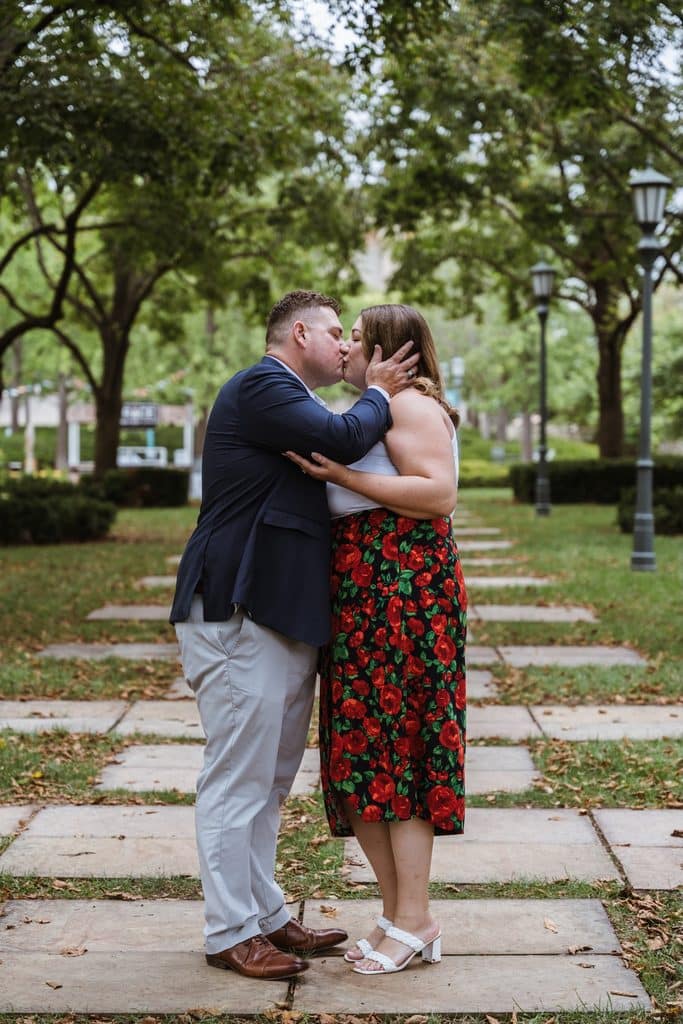
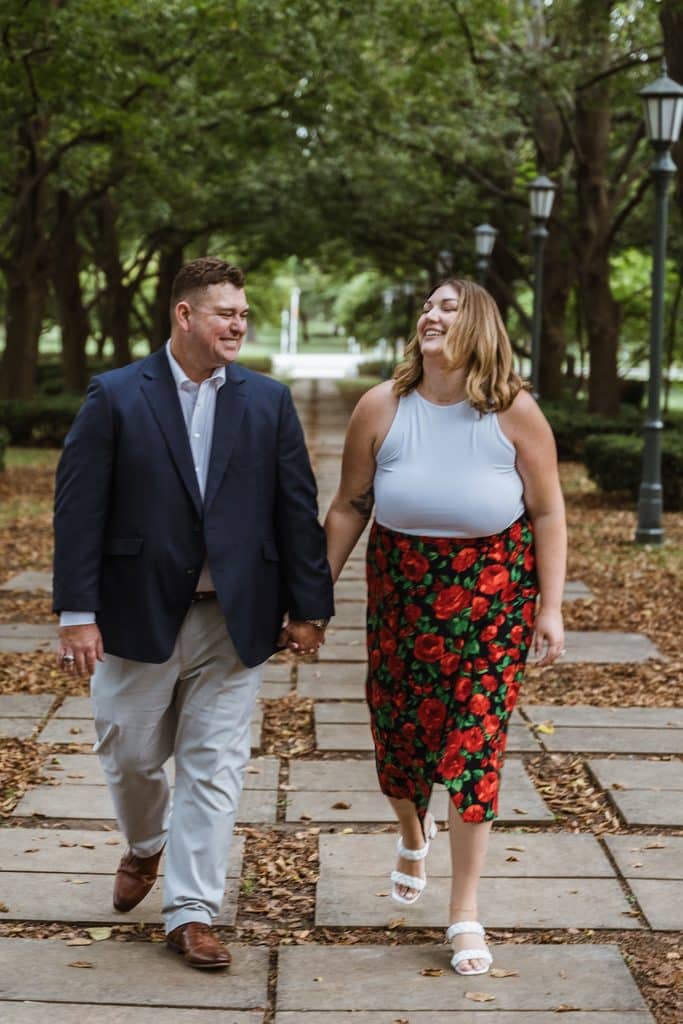
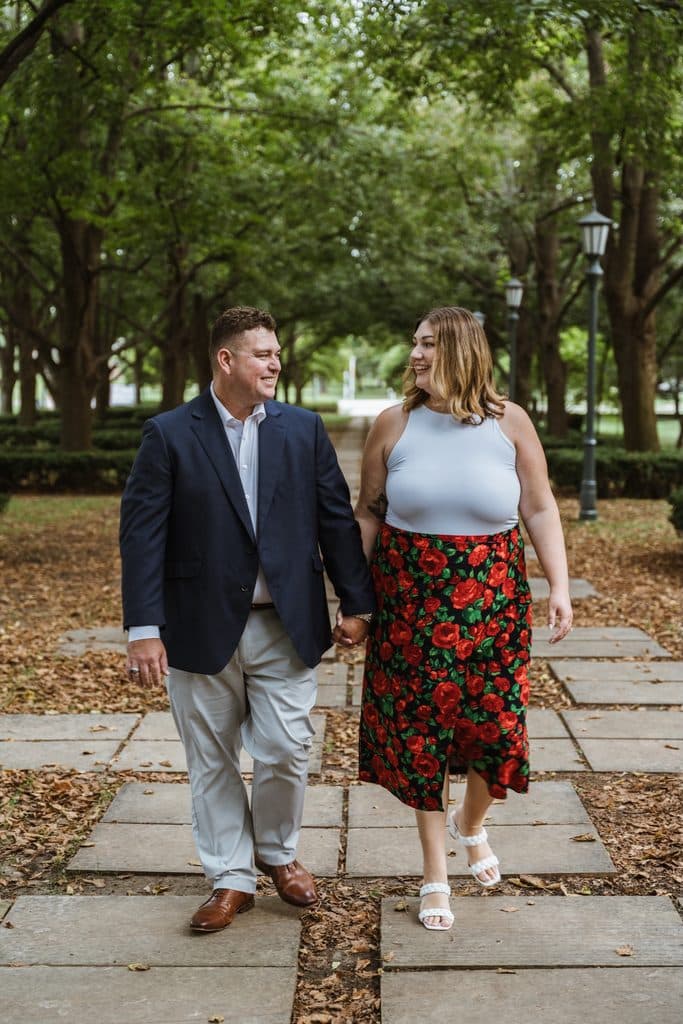
- The linden walkways: straight paths running the length of the central lawn under rows of Redmond linden trees, with lamp posts and benches along the way. You lose most of the sky here and gain a quiet, leafy backdrop.
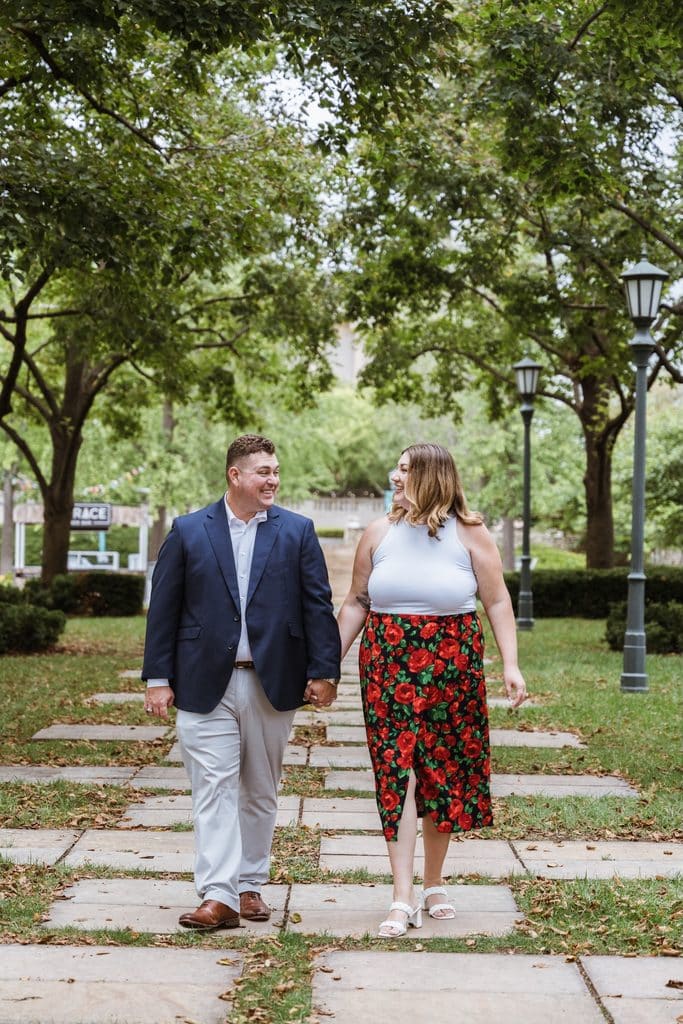
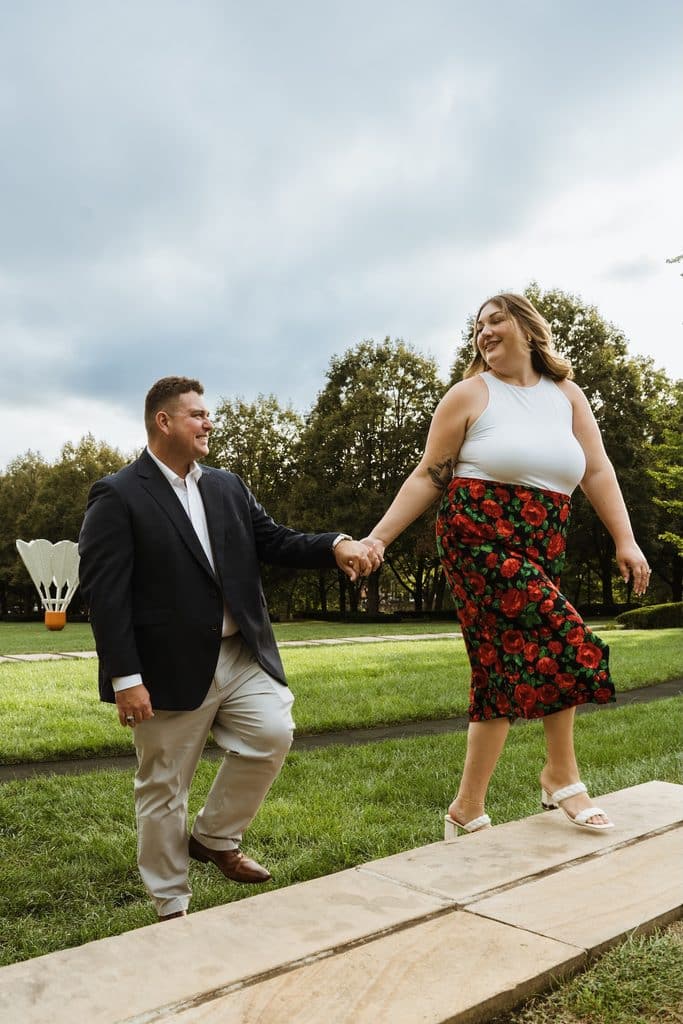
Will picked a linden walkway. When I scouted the grounds, I moved our spot a little further south from my first map to get better light on their faces. The directions I sent him read like this: walk out of the museum, head south down the steps, and keep going along the walkway until you're roughly even with the nearest shuttlecock and the third lamp post on your right. He didn't need to hit the exact spot, only get close.
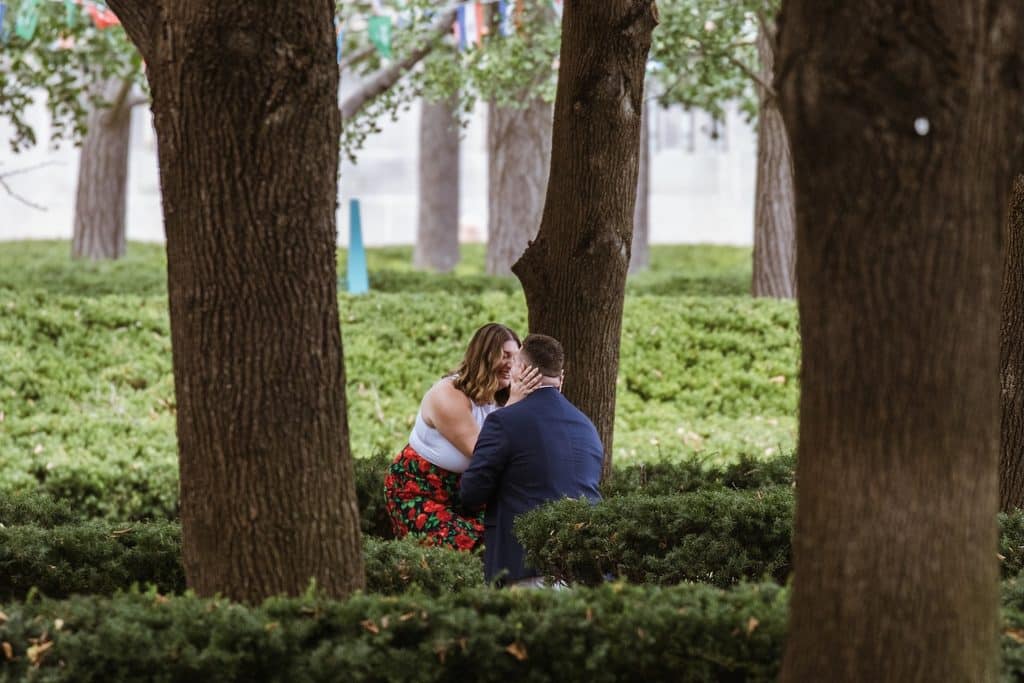
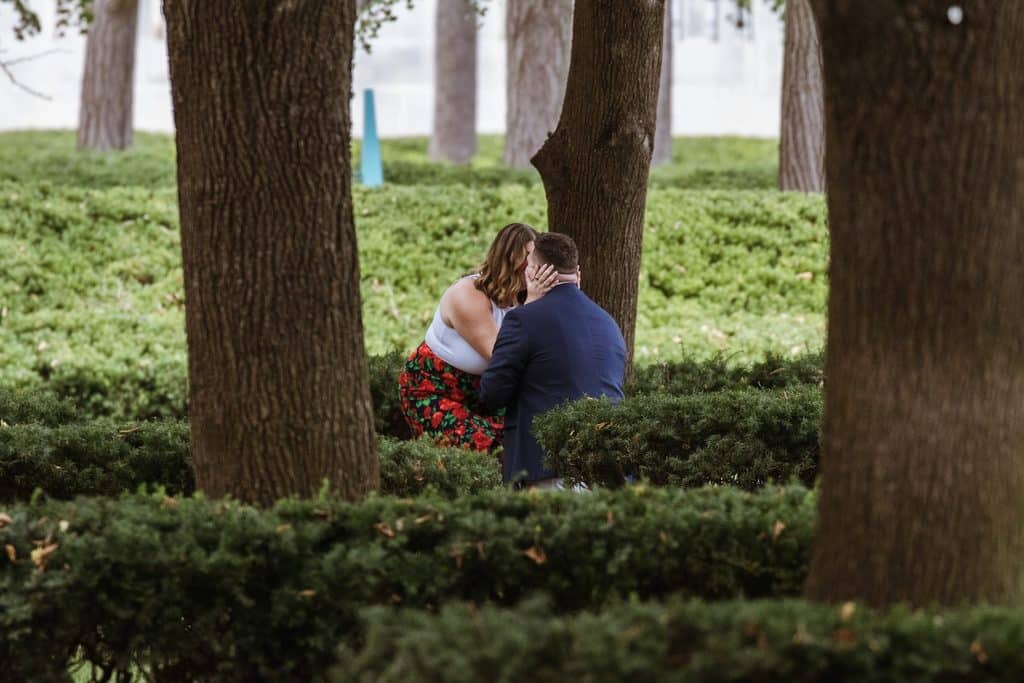
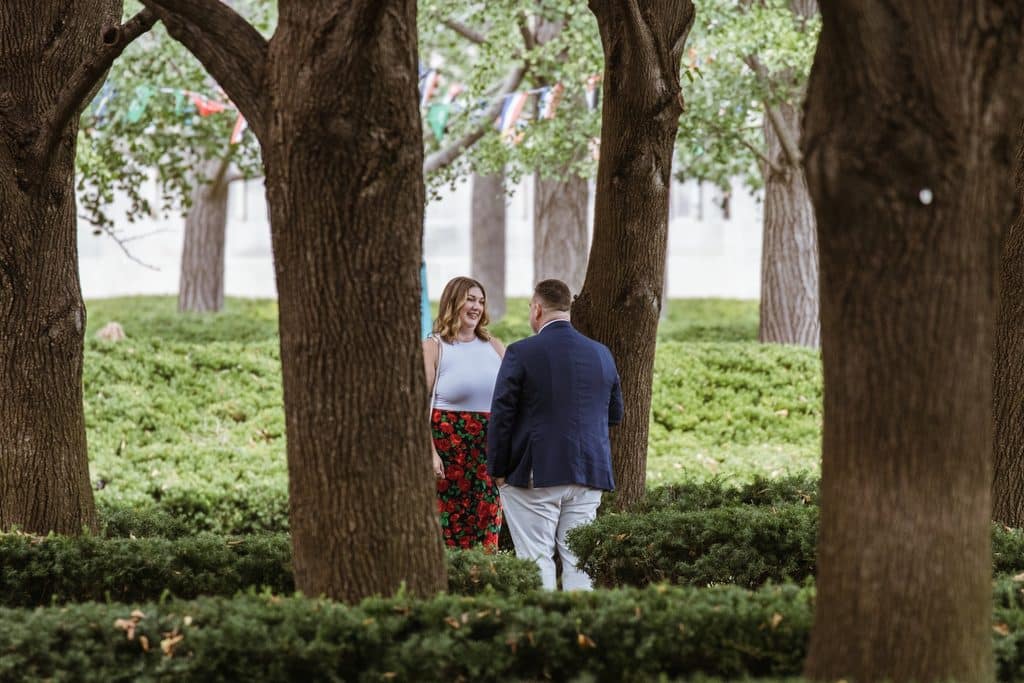
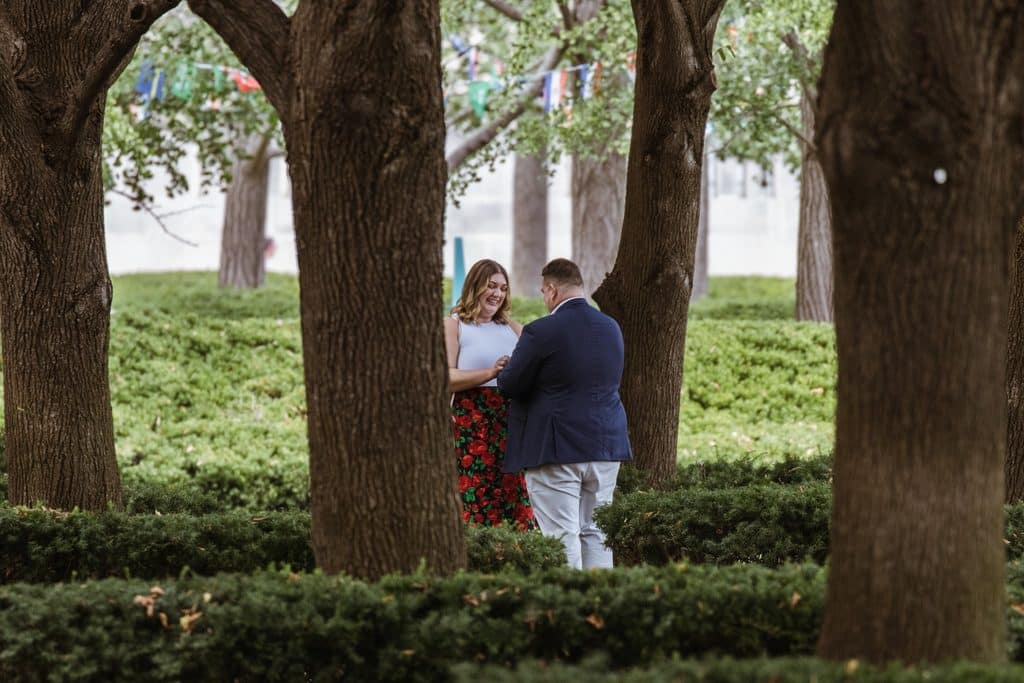
Right there, the walkway opens up toward the east, which gave Sondra's family a clear line of sight across the lawn. I placed them at the picnic tables and benches on the far side. We sent everyone a photo and a pin so they'd find the rally point without asking him questions in front of Sondra.
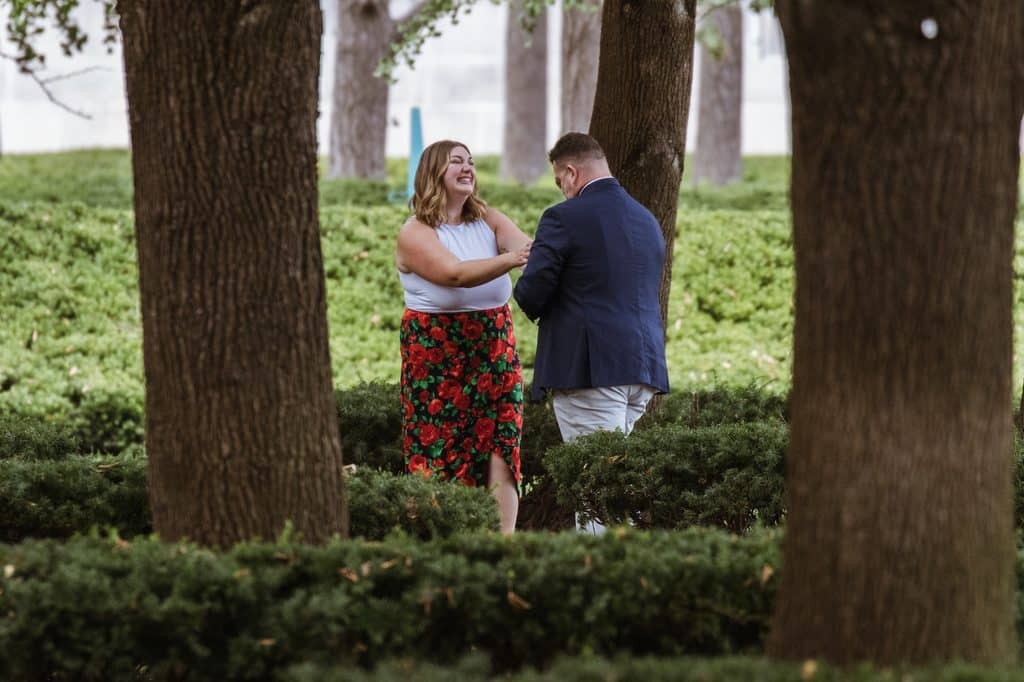
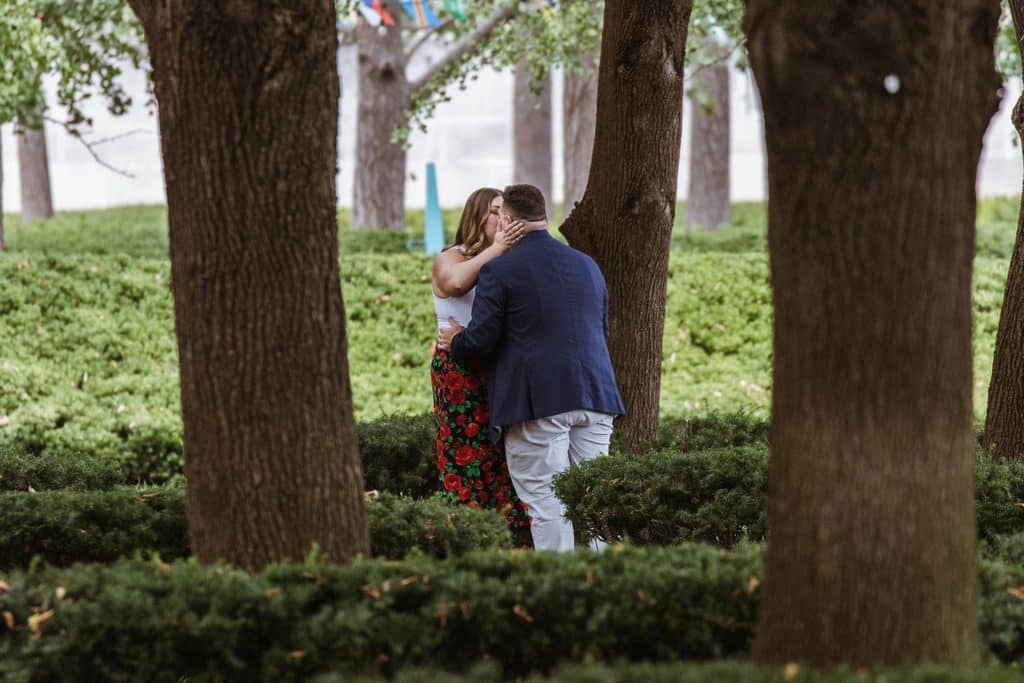
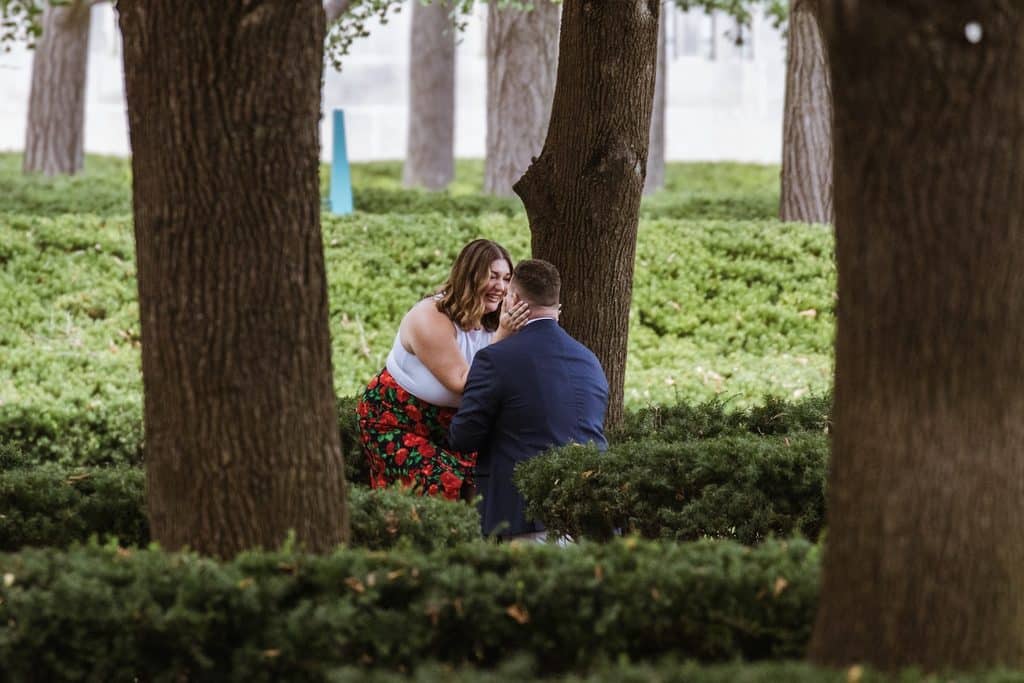
I set up further south on the same walkway with a long telephoto lens. From where Sondra walked, I looked like one more person out on the grounds on a Sunday evening.
How Will Knew I Was in Position
Will asked whether he should send me a selfie in his outfit so I'd recognize him. I had a simpler plan. On the day, I'd share my live location with him through Find My iPhone so he'd see me on his map. Once I was set, I'd text him something bland like "Glad you made it safely!" If Sondra glanced at his phone, the message meant nothing.
We also set a ready-by time. With a window of 5:15 to 5:30, Will knew I wouldn't be in place before 5:15. I treat the first minute of the window as the first possible second of the proposal and work backward from there for arrival, check-in, and setup. The Nelson-Atkins asks every photographer to sign in before each outdoor session. I'd registered with the museum when Will signed his contract and checked in again on the day, so Will had no paperwork to handle.
Posing a Couple Already Planning a Hawaii Wedding
Will and Sondra are getting married in Hawaii next year, and they were already deep into planning by September. While they talked through wedding photographers, Sondra said she wanted someone who poses a couple with some artistry, beyond lining up and saying cheese. Will passed the request along before the shoot and asked me to give them as much direction as the evening allowed.
Nelson-Atkins Proposal Logistics: Parking, Rules, and Rain
Parking
When I scouted, I found free street parking on the northbound lane of Oak Street, along the west side of the museum, between Dr. Martin Luther King Jr. Boulevard and East 45th Street. The museum's Oak Street garage costs $20 per visit, free for members, veterans, and active military. Give your hiding family the street option and the garage as a backup.
Hours
The galleries close at 5 p.m. Saturday through Monday and stay closed Tuesday and Wednesday. The Donald J. Hall Sculpture Park is free and open from sunrise to sundown, so an evening proposal on the grounds works on any day of the week.
Museum Rules
The museum's outdoor photography guidelines ban alcohol, confetti, and glitter on the grounds. Skip the champagne pop on the lawn and save the toast for dinner. Keep everyone off the sculptures and the reflecting pool, and leave the paths clear for other visitors. Your family needs to stay out of the walkways while they wait.
Rain
Will didn't have an indoor backup and told me to tell everyone the plan was on, rain or shine. If storms hit, he'd propose under cover and we'd cut the portraits short. Professional portrait sessions aren't allowed inside the museum, so a rain plan at the Nelson-Atkins means a covered spot outdoors or a second location nearby.
How to Plan a Proposal Long Distance
Time needed: 2 hours
The steps Will and I followed to plan his Nelson-Atkins proposal.
Book a local photographer who scouts for you
Your photographer walks the location, checks the light, and picks a spot so you don't have to fly in early.
Start with sunset and your guest list
Look up the sunset time for your date, then decide who needs to see the moment and when they have to leave. Build the evening backward from both.
Ask for photos from different angles
The path you walk in on, the spot where you stop, and the photographer's point of view tell you everything a site visit would.
Send everyone a photo and a pin
Your family and friends need a rally point they find without texting you.
Set a ready-by time
Give your proposal a window, then assume no one is ready before the first minute of the window.
Share live location and pick a quiet confirmation text
A bland message like "Glad you made it safely!" tells you the photographer is set without tipping off your partner.
Tell your photographer about every surprise inside the surprise
Any additional special surprises should be communicated ahead of time to ensure the photos are captured.
Frequently Asked Questions About Planning a Long-Distance Proposal
Book a photographer in the city where you're proposing and let them scout for you. Will planned his Nelson-Atkins proposal from Hawaii over seven weeks of email, with maps, photos from three angles, and pins for himself and Sondra's family. He arrived a few days before the proposal and skipped the site visit.
No. Clear photos of the path in, the spot to stop, and the photographer's view answer the same questions a visit does. Will had walked the Nelson-Atkins grounds once before and planned his spot from the photos and maps alone.
Yes. The Donald J. Hall Sculpture Park and the grounds are free and open from sunrise to sundown. Professional photographers need to sign in with the museum before each session, and the guidelines ban alcohol, confetti, and glitter on the grounds.
For Will and Sondra, the best spot sat on the linden walkway south of the museum steps, roughly even with the nearest shuttlecock. The walkway opens toward the east lawn there, which gave the family a clear view and gave me room to shoot from down the path. The central lawn works if you want the museum in the background.
Sunset on September 20, 2026 fell at about 7:18 p.m. A proposal around 6:00 p.m. gives you golden light for portraits right after. Will proposed earlier, in a 5:15 to 5:30 window, so family from Wichita would leave by about 5:30, and he added a second hour to keep shooting until 7:00.
The picnic tables and benches across the lawn from the linden walkway give your friends and family a clear view without putting them in her line of sight. Send your group a photo and a pin of the spot and ask them to wait for your signal.
Free street parking runs along the northbound lane of Oak Street on the west side of the museum, from Dr. Martin Luther King Jr. Boulevard to East 45th Street. The Oak Street garage costs $20 per visit.
Planning Your Own Proposal From Out of Town
Tell me your date, who's coming, and when they have to leave on our contact page, even if you're writing from a different state or a different ocean. I'll scout the spot, work out the timing from sunset, and send you photos and pins to plan around from wherever you are. Our proposal photography page covers how sessions work, and if you're still weighing locations, the where to propose in Kansas City breakdown and the holiday proposal guide cover more spots around town.
Congratulations, Will and Sondra!
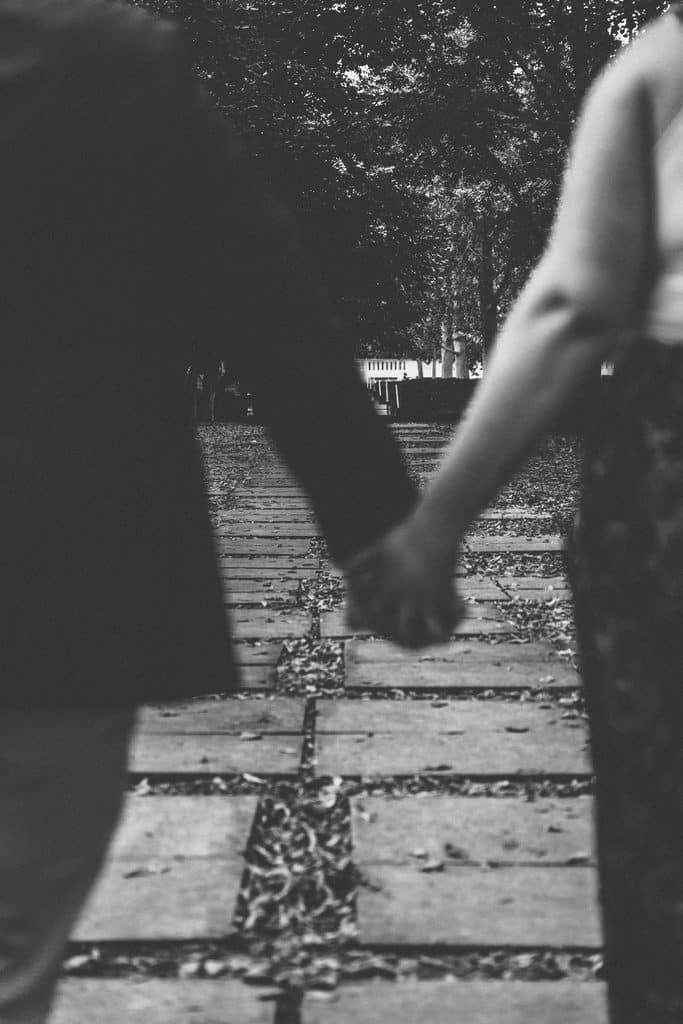
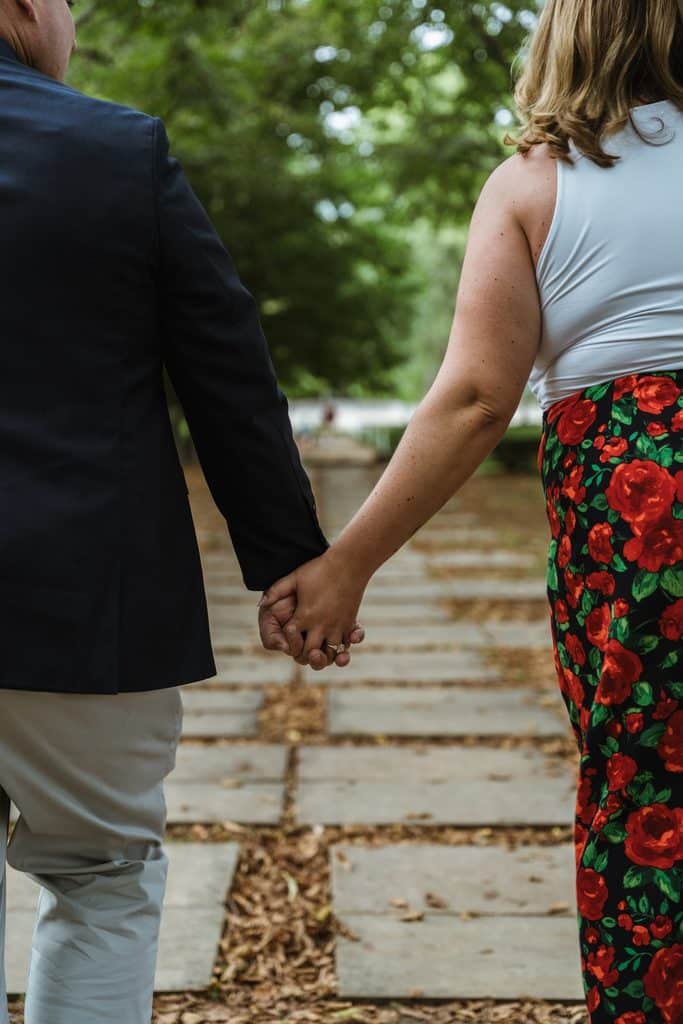
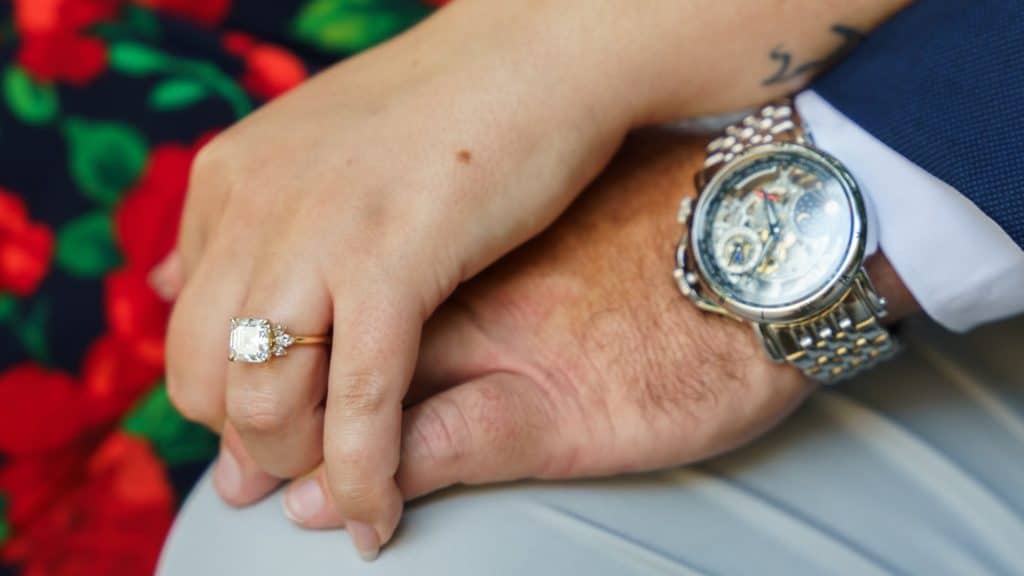
Nelson-Atkins Proposal Gallery